


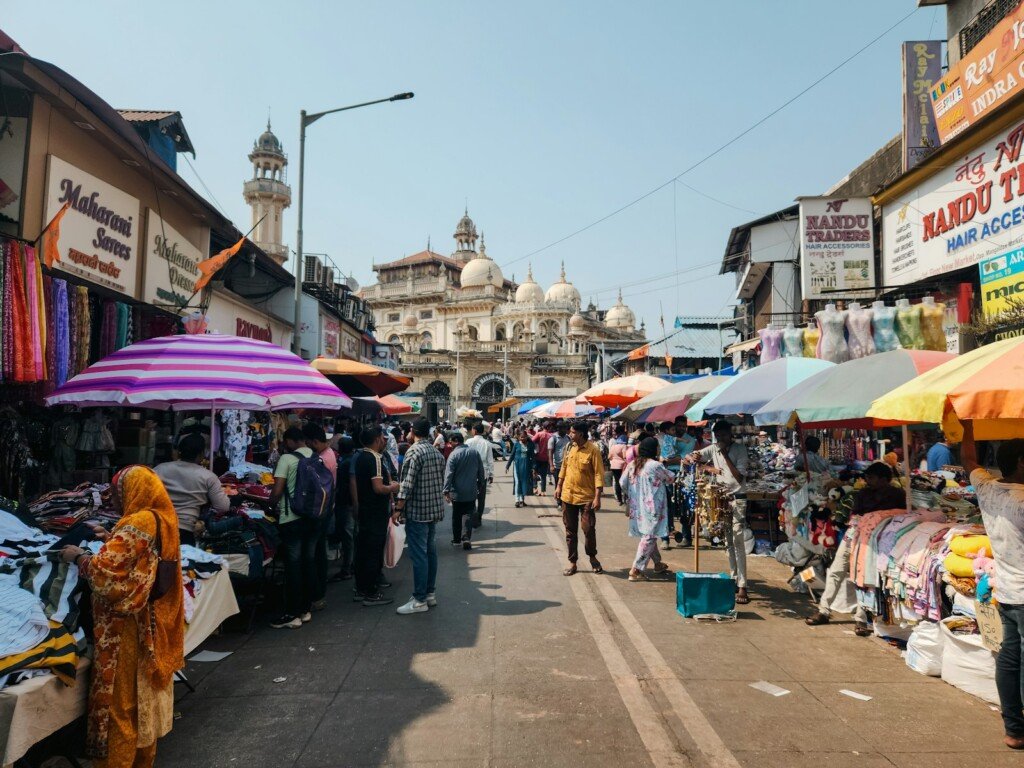

Burrabazar is Kolkata’s oldest and largest wholesale market, and this Burrabazar market guide covers everything you need before heading in: what to buy, which lanes specialise in what, timings, how to reach the area, and how to bargain like someone who knows the market rather than a first-time tourist. Spread across the Jorasanko and Posta neighborhoods in the city’s historic north-central core, Burrabazar has been used for well over two centuries by traders moving textiles, spices, hardware, stationery, groceries and electronics in bulk, and it remains the first stop for shopkeepers restocking from across eastern India. Visitors come for wholesale prices on Bengal’s handloom sarees, from Tant and Jamdani to Baluchari, alongside bargains on fabric, garments, brassware, dry fruits and festival decorations that are hard to match anywhere else in the city, whether you’re buying by the piece or in wholesale quantity.
Burrabazar Market Guide: History and Overview
Burrabazar’s name simply means “big market” in Bengali, and it has functioned as Kolkata’s principal trading hub since well before the British East India Company built its warehouses nearby on the Hooghly riverbank. Marwari and Gujarati trading families who settled here from the 18th century onward organised the market into specialised lanes, a structure that survives largely unchanged today. Because of its scale and density, Burrabazar is often compared to Delhi’s Chandni Chowk, though it is arguably older and, in terms of sheer trading volume, bigger.
What to Buy at Burrabazar
- Handloom sarees and fabric: Tant, Jamdani, Baluchari and synthetic sarees at wholesale rates, concentrated around Cotton Street and Jamunalal Bajaj Street.
- Ready-made garments: kurtis, shirts, jeans and children’s wear, sold by the piece or in bulk lots depending on the shop.
- Spices and dry goods: whole and ground spices, dry fruits and grocery staples, mostly around the Raja Katra area.
- Hardware and utensils: steel and brass kitchenware, tools and fittings, a legacy of the market’s old metalware trade.
- Stationery, gifts and festival items: pens, notebooks, decorations and puja items, especially busy in the weeks before Durga Puja and Diwali.
Burrabazar’s Famous Sub-Markets and Pattis
Burrabazar isn’t one market but dozens stitched together, each lane historically named for the single commodity it traded. Dhotipatti still deals mainly in cotton dhotis and fabric, Tulapatti in yarn and jute, Chinipatti in sugar, and Fancypatti in fancy and festive cloth. Cotton Street and Mahatma Gandhi Road are the main arteries for saree and garment shopping, while Posta, on the market’s western edge closer to the river, is known for its grocery and dry fruit wholesalers. Each patti is further divided into katras, old trading blocks such as Raja Katra and Manohar Das Katra, some of which still carry the names of the merchant families who built them generations ago.
Burrabazar Timings and Best Time to Visit
Most shops open around 10am and trade until early evening, typically 7 to 8pm, Monday to Saturday. Sunday is the market’s weekly off day and the vast majority of shutters stay down, so plan any visit for a weekday. Weekday mornings, especially Tuesday to Thursday between 10am and noon, are the calmest time to browse, before the lanes fill up with delivery handcarts and afternoon crowds. Exact hours vary shop to shop, so if you’re travelling specifically for one trader, it’s worth confirming directly before you go.
How to Reach Burrabazar
The closest Kolkata Metro stations are Mahatma Gandhi Road and Mahakaran on the Blue Line, both under a kilometre from the market’s main lanes; see our Kolkata Metro Route Guide for the full network. From MG Road station, walk back along Chittaranjan Avenue and take a right onto Mahatma Gandhi Road towards Barabazar and Howrah. Burrabazar also sits a short walk from Howrah Bridge and the Howrah side of the river, so it pairs naturally with a stop there; see our Howrah Bridge guide for photo spots and history. City buses running along Chittaranjan Avenue, Central Avenue and Strand Road all stop within walking distance, and shared autos or taxis can drop you closer to a specific lane once you know which one you need. For up-to-date routes and fares, check the Kolkata Metro Rail Corporation‘s official site.
How to Bargain at Burrabazar
- Ask for the wholesale rate upfront and be clear about quantity: Burrabazar traders price by the piece, dozen or bundle, and single-unit buyers get noticeably weaker discounts.
- Compare rates at two or three shops in the same patti before committing; specialised lanes mean your nearest competitor is often a few doors away.
- Confirm minimum order quantity, packing and whether a GST bill is included, especially if you’re buying enough to resell.
- Carry cash in manageable denominations; card acceptance is patchy in the older lanes and vendors may not have change for large notes.
- Go early and go on a weekday; traders are more attentive and more willing to negotiate before the midday rush sets in.
Planning Your Visit
Burrabazar rewards a slow, planned visit rather than a rushed one, since its real value is in specific lanes rather than a single central building. If sarees are your main interest, our guide to traditional Bengali sarees covers which weaves to look for and where else in the city to find them at retail prices. Pair a Burrabazar trip with a walk across Howrah Bridge, or extend the day toward New Market if you also want fixed-price retail shopping and a calmer pace after Burrabazar’s crowds.
Frequently Asked Questions
Is Burrabazar only for wholesale buyers?
No. While the market is built around bulk trading, many shops, especially in saree and garment lanes, will sell single pieces to retail customers, often at prices still well below city malls or fixed-price stores. Don’t expect wholesale-level discounts on single items, though.
What is the best day to visit Burrabazar?
Weekdays, particularly Tuesday to Thursday mornings, are best. The market is closed on Sundays, and Saturdays tend to be the most crowded weekday.
Is Burrabazar safe for tourists?
Yes, though the lanes are narrow, congested and easy to get lost in. Keep valuables secure in the crowds, agree on prices before a vendor starts wrapping goods, and stick to well-trodden lanes if you’re unfamiliar with the area.
How is Burrabazar different from New Market?
Burrabazar is a wholesale trading hub organised by commodity, while New Market is a more tourist-friendly retail market under one roof. If you want bulk prices and don’t mind navigating a maze of lanes, choose Burrabazar; for a calmer, single-building shopping experience, New Market is the easier option.
Can I get things shipped from Burrabazar shops?
Many wholesale traders in Burrabazar routinely ship orders across India and can arrange this for larger purchases, though it’s less common for small retail buys. Ask the specific shop about packing, courier tie-ups and any minimum order for shipping before you commit to a purchase.