


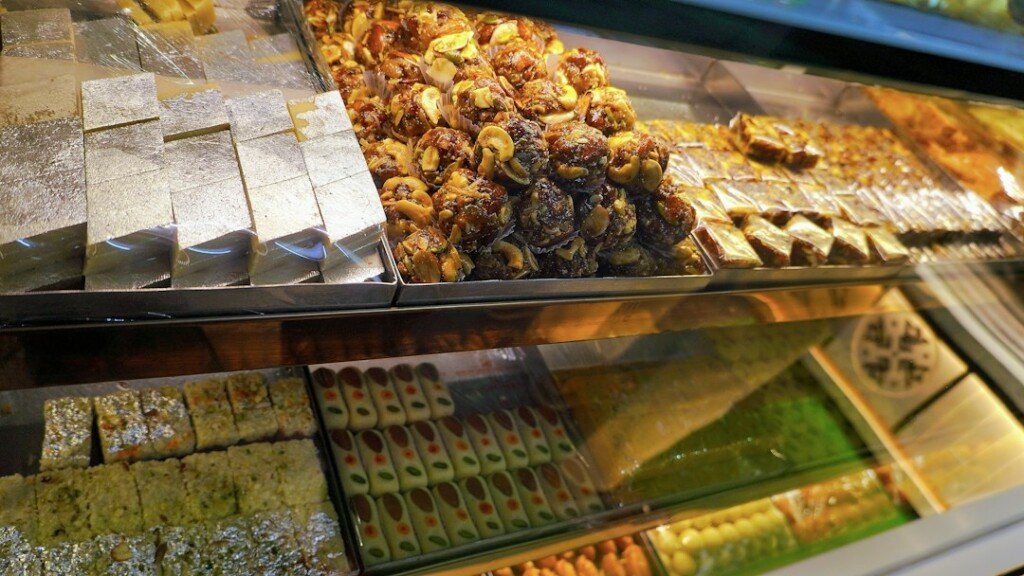

The best Bengali sweets in Kolkata are found at old family-run mishtanna bhandars rather than at big modern chains. For rosogolla, head to the KC Das and Nobin Chandra Das shops, for sandesh look to Girish Chandra Dey and Nakur Chandra Nandy or Nalin Chandra Das and Sons, for nolen gur sweets and korapak try Balaram Mullick and Radharaman Mullick in Bhowanipore, and for ledikeni visit the Bhim Chandra Nag shop in Bowbazar. Mishti doi, the sweet set yoghurt served in earthen pots, is sold at almost every one of these shops and is the easiest first purchase for a visitor. Most shops open in the morning and stay busy until late evening, and a box of mixed sweets typically costs only a few hundred rupees. Prices change with the season and the ingredients, so confirm current rates at the counter. This guide explains what to order, where to find it, how to buy sweets without being overcharged, and how to carry them home safely.
Bengali Sweets Kolkata Visitors Should Try First
Bengali sweets fall into two broad families. The first is chhena-based sweets, made from curdled and kneaded milk. These include rosogolla, sandesh, rajbhog, chomchom and pantua. The second family uses thickened milk, rice flour, coconut or jaggery. Examples are kheer-filled sweets, patishapta, narkel naru and the winter favourite, nolen gurer sandesh.
Rosogolla
The spongy white ball in light sugar syrup is the sweet most people associate with Bengal. Nobin Chandra Das, born in 1845, is widely credited with modifying the recipe in 1868 to give the sweet a longer shelf life, and his son Krishna Chandra Das built the KC Das name that is still sold across the city. You can read the family history on Nobin Chandra Das on Wikipedia. Eat rosogolla fresh and slightly cool, not frozen.
Sandesh
Sandesh is a fresh chhena sweet that comes in dozens of moulded shapes, from plain kancha gola to elaborate fruit and flower designs. Old shops make both soft and firm versions. In winter, look for sandesh flavoured with nolen gur, the date-palm jaggery that arrives from December to February.
Mishti Doi
Mishti doi is milk thickened with sugar or jaggery and set into a mild, sweet yoghurt in a clay pot. The pot keeps it cool and helps it set, so it is sold with the pot. It travels better than most other Bengali sweets.
Ledikeni and Pantua
Ledikeni is a fried, syrup-soaked sweet linked with the 1850s and with Bhim Chandra Nag, whose shop in Bowbazar dates back to 1826. Pantua is similar but darker and softer. Both are served warm at some shops, which is the best way to eat them.
Best Sweet Shops in Kolkata by Specialty
The shops below are long-established names that appear repeatedly in food writing on the city. Opening hours, branches and prices change, so treat this as a starting point and confirm details before a long trip.
Best for Rosogolla: KC Das and Nobin Chandra Das
KC Das is the most recognised rosogolla brand, with several outlets across the city. The original Bagbazar area on Chitpur Road is the historic heart of the trade. If you only buy one box, make it fresh rosogolla from here and eat it the same day.
Best for Sandesh: Girish Chandra Dey, Nakur Chandra Nandy and Nalin Chandra Das
Girish Chandra Dey and Nakur Chandra Nandy are known for sandesh, jolbhora and manohara. Nalin Chandra Das and Sons has a long reputation for sandesh and is credited with an early chocolate version. Both are good places to compare textures, from crumbly to creamy.
Best for Nolen Gur and Korapak: Balaram Mullick and Radharaman Mullick
Founded in 1883 and based in Bhowanipore in south Kolkata, this shop is known for korapak, a firm sweet made with thickened milk and sugar syrup, and for sweets made with nolen gur in winter. Bhowanipore is easy to combine with a meal in the neighbourhood.
Best for Kheer-Filled and Jaggery Sweets: Kotal’s Satyanarayan
Founded in 1952 with outlets including Tollygunge and Moore Avenue, Kotal’s Satyanarayan is known for nolen gurer bacchabog and kheerer guti. It is a convenient stop for anyone staying in the south of the city.
Best for Ledikeni: Bhim Chandra Nag
The Bowbazar shop is the traditional answer when someone asks where to eat ledikeni. It sits near the older commercial streets of central Kolkata, so combine it with a walk around the area.
How Much Do Bengali Sweets Cost?
Single pieces of rosogolla, sandesh or pantua usually cost a modest amount each, while premium varieties made with nolen gur, dry fruits or khoya cost more. A mixed box for a family typically falls in the range of a few hundred rupees. We cannot give a verified fixed price list, because rates differ by shop, season and weight. Ask for the per-kilogram or per-piece rate before you order, and check that the weighing includes the box and not the syrup.
Best Time to Eat Bengali Sweets in Kolkata
Winter, roughly December to February, is the best season because of nolen gur. Sweet shops also run at full strength around Durga Puja, Bhai Phota and Poila Boishakh, when queues are long and many shops sell out of popular items by evening. If you are visiting during the festival, read our Durga Puja pandal-hopping guide to plan your route around sweet stops.
Tips for Buying and Carrying Sweets
- Buy chhena sweets such as rosogolla and sandesh on the day you plan to eat them. They are best within a day, or two at most if kept cool.
- Ask for sweets packed with syrup separately if you are travelling by train or air.
- Mishti doi in clay pots and dry sweets such as narkel naru travel best.
- Carry cash or UPI for smaller shops, since not every counter has a card machine.
- Go early on weekends and festival days to avoid queues.
Pair Sweets with Other Kolkata Food Stops
Sweet shops sit comfortably inside a larger food day. Start with savoury plates from our guide to budget eats under Rs 200 near Park Street and College Street, finish with chilled desserts from the best ice cream and kulfi shops in Kolkata, or settle in with a cup from the best tea shops in Kolkata. For an evening plan, see Park Street after dark, where Flury’s, known for its rum balls and cakes, is a classic stop.
Frequently Asked Questions
Which is the most famous sweet in Kolkata?
Rosogolla is the best-known Bengali sweet, followed closely by sandesh and mishti doi. All three are sold at nearly every traditional mishtanna bhandar in the city.
Where can I buy the original KC Das rosogolla?
KC Das has multiple outlets in Kolkata. The family’s roots are on Chitpur Road in Bagbazar, so that area is the place to start if you want the historic connection.
When is nolen gur available in Kolkata?
Nolen gur, the fresh date-palm jaggery, is a winter ingredient, available roughly from December to February. Sweets made with it are seasonal and often sell out quickly.
Can I carry Bengali sweets on a flight or train?
Yes, but choose well. Ask the shop to pack syrup-based sweets in leak-proof tins, and prefer mishti doi in a sealed pot or dry sweets for long journeys. Eat chhena sweets within a day.
Are Bengali sweets very sugary?
Many are lightly sweetened compared with sweets from other regions, especially fresh sandesh. If you prefer less sugar, ask for kancha gola or plain sandesh and drain the syrup from rosogolla before eating.