



Kolkata street food is built around three icons: the kathi roll, jhalmuri, and puchka (phuchka), and each has a handful of stalls locals actually queue for rather than just any street cart. For kathi rolls, Nizam’s near New Market claims to be the birthplace of the dish and remains a starting point, alongside long-running favourites like Kusum Rolls on Park Street and Zeeshan’s Mughlai-style rolls across its outlets. Jhalmuri, the spiced puffed-rice snack, is less about a fixed address and more about finding a good muriwala; Triangular Park in the late afternoon and the stalls around Russell Street near Park Street are reliable bets. Puchka, Kolkata’s tangier answer to gol gappa, draws crowds outside Victoria Memorial, along Camac Street near Vardaan Market, and around Lake Kalibari and Vivekananda Park in south Kolkata. None of these are formal restaurants, so expect cash payments, no seating, and prices that shift over time — treat any figure here as an approximate guide.
Kathi Rolls: Where Kolkata’s Signature Roll Began
The kathi roll — skewer-grilled kebab wrapped in a paratha, often with egg, onions, and a chutney — is widely credited to Nizam’s, a Mughlai restaurant near New Market that has been serving the dish since around 1900. It remains a reasonable starting point precisely because it’s the origin story, even if opinions differ on whether it’s still the best version in the city. For a more contemporary take, Kusum Rolls on Park Street has built a loyal following among students and office-goers for its consistency and quick turnaround. Zeeshan, with multiple outlets across Kolkata, is known for generous Mughlai-style rolls, while Badshah and Chaccha Jaan (Chowbhagha Road) are older names that still pull crowds. Parijat on Shakespeare Sarani is worth a detour for its double egg chicken kathi roll specifically. If you’re building a food crawl around the city’s older establishments, our guide to historic Kolkata eateries covers several of these in more depth.
Jhalmuri: The Snack You Find, Not Book a Table For
Jhalmuri — puffed rice tossed with mustard oil, chopped onion, green chilli, peanuts, and a mix of spices — doesn’t really have a definitive “best shop” the way kathi rolls do, because it’s a cart-and-hand craft that varies vendor to vendor. That said, certain spots have built reputations: Triangular Park in south Kolkata is considered a strong bet in the late afternoon window (roughly 4pm to 7pm), and the stretch around Russell Street near Park Street has several vendors known for a generous, well-balanced mix with extras like papri chaat on the side. The honest advice locals give is to watch how a vendor prepares it — freshly cut vegetables and a quick, confident mixing motion are usually good signs.
Puchka (Phuchka): Kolkata’s Answer to Gol Gappa
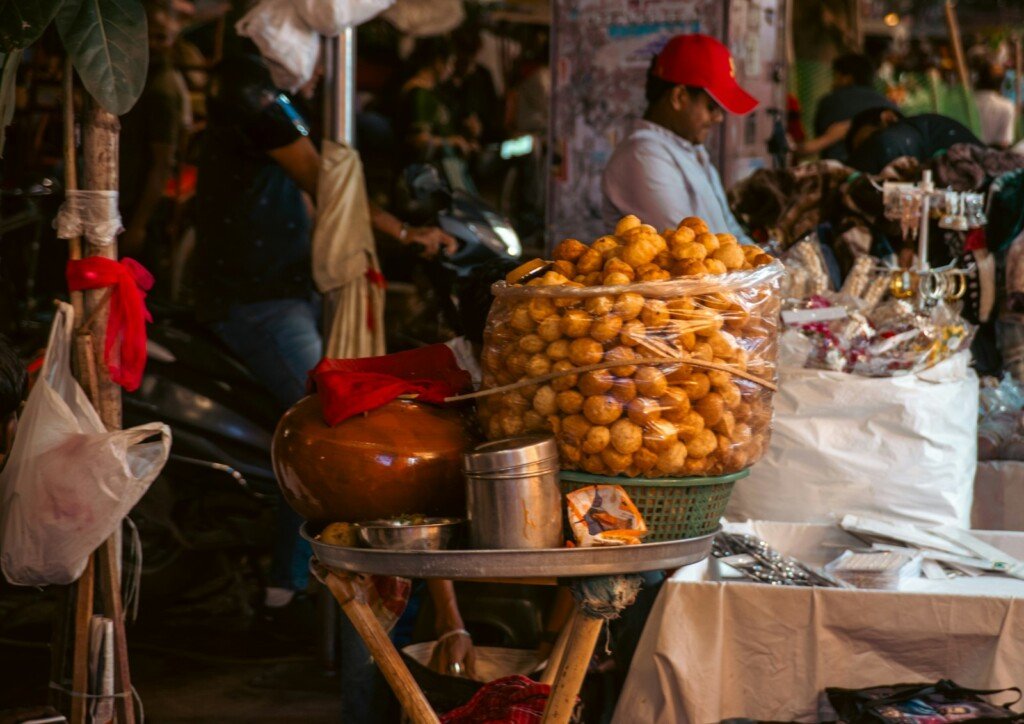
What north India calls gol gappa or pani puri, Kolkata calls puchka or phuchka, and the Bengali version leans more heavily on a tamarind-spiked, tangier water along with a mashed potato and yellow pea filling. Reliable spots include the phuchkawalas stationed in front of Vardaan Market on Camac Street and near Victoria Memorial, both popular with office-goers and tourists passing through. South Kolkata locals tend to point toward the stalls near Lake Kalibari and Vivekananda Park, while the Muktarambabu Street and Central Avenue crossing has its own dedicated following around vendors like the Chacha Bhatija Shop. As with jhalmuri, puchka is a hyperlocal craft — the “best” stall is often just the closest one a family has trusted for years.
How to Eat Kolkata Street Food Safely and Smartly
- Go where there’s a visible queue or turnover — high footfall usually means fresher ingredients and faster stock rotation.
- Carry cash in small denominations; most stalls don’t accept cards and rarely have change for large notes.
- If you have a sensitive stomach, start with kathi rolls (cooked to order) before trying puchka water, which is served raw.
- Evenings (roughly 4pm to 8pm) tend to be peak hours for jhalmuri and puchka vendors, when stock is freshest.
- Prices are usually fixed and modest, so bargaining isn’t the norm the way it might be at a market stall.
Building a Street Food Crawl Around These Three Snacks
A practical route pairs geography with appetite: start near New Market or Park Street for a kathi roll at Nizam’s or Kusum Rolls, walk toward Camac Street for puchka near Vardaan Market, and end the evening at Triangular Park or a nearby jhalmuri cart once the light starts to fade. For a broader sense of what else is worth eating in the city beyond these three snacks, see our complete Kolkata food guide, and if you’re visiting during Durga Puja specifically, our Puja food guide covers seasonal specials that show up around pandal-hopping routes. The West Bengal Tourism department also occasionally lists food walks and heritage trails that loop through several of these neighbourhoods.
Frequently Asked Questions
Where did the kathi roll originate?
The kathi roll is widely credited to Nizam’s, a Mughlai restaurant near New Market in Kolkata that has served the dish since around 1900, originally as a way for customers to eat kebabs without cutlery.
What is jhalmuri made of?
Jhalmuri is puffed rice mixed with mustard oil, chopped onion, tomato, green chilli, roasted peanuts, and a blend of spices, sometimes with additions like chopped coconut or sev depending on the vendor.
Is puchka the same as golgappa or pani puri?
They’re close relatives rather than identical. Puchka uses a similar crisp puri shell and potato filling, but the water is typically more tamarind-forward and tangy compared to the mint-heavy pani puri water common in north India.
What’s the best time of day for Kolkata street food?
Late afternoon to early evening, roughly 4pm to 8pm, is generally the best window for jhalmuri and puchka, when vendors have fresh stock and footfall is high. Kathi roll shops tend to run steady through lunch and dinner hours.
Is Kolkata street food safe for tourists?
Generally yes at high-turnover stalls, though first-time visitors with sensitive stomachs may want to start with freshly cooked items like kathi rolls before trying raw preparations like puchka water, and always check that ice or water used looks clean.