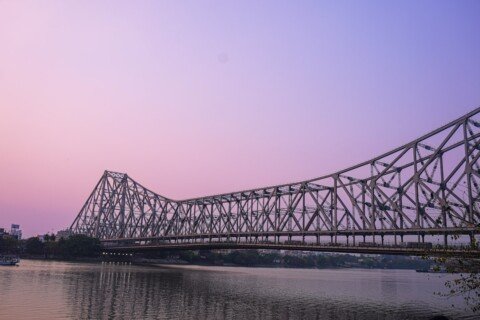



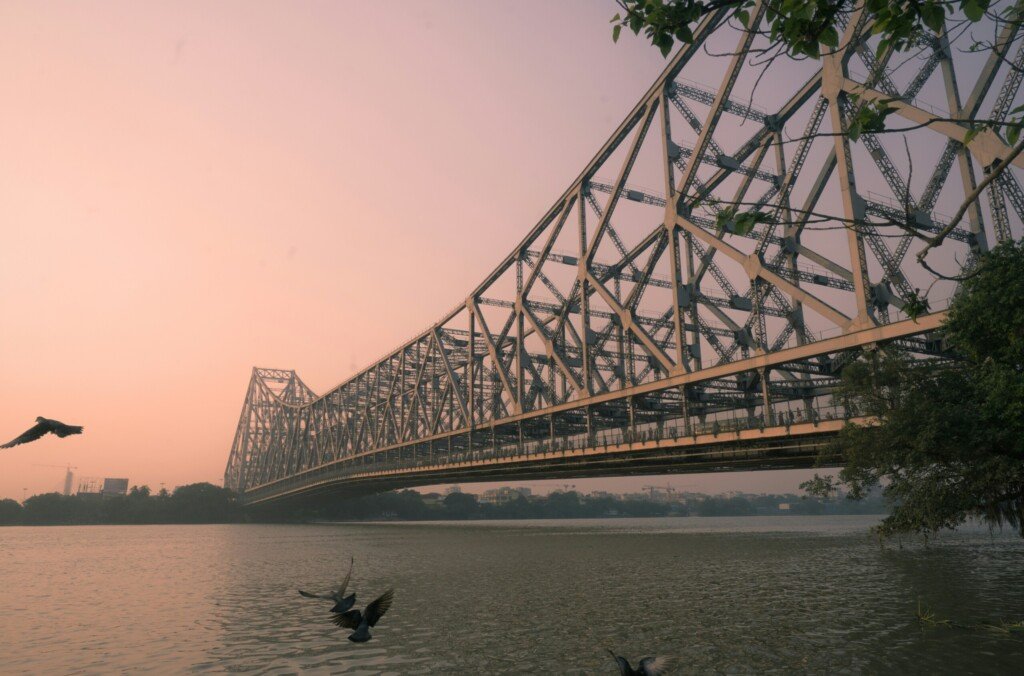

Howrah Bridge Kolkata is one of the most photographed structures in the city: a 705-metre cantilever bridge spanning the Hooghly River between Kolkata and Howrah, officially renamed Rabindra Setu in 1965 but still known everywhere by its original name. Built between 1936 and 1942 and opened to traffic in February 1943, it carries roughly 100,000 vehicles and well over a hundred thousand pedestrians every single day, making it one of the busiest bridges anywhere in the world. For visitors, the appeal is less about crossing it and more about seeing it: the view from a ferry crossing the river, from Mullick Ghat’s flower market underneath the southern end, or from Prinsep Ghat downstream all offer distinct angles on its riveted steel lattice. This guide covers the bridge’s history, key engineering facts, the best spots and times to photograph it, and practical tips for getting there.
A Quick History of Howrah Bridge (Rabindra Setu)
The bridge replaced an earlier pontoon bridge that had connected Kolkata and Howrah since the 1870s and could not keep up with growing rail and road traffic. Construction of the current structure began in 1936, using a design by the British firm Rendel, Palmer and Tritton, and building work was carried out by Braithwaite, Burn and Jessop Construction Company. The bridge opened to traffic on 3 February 1943, during the Second World War, and was built without a single nut or bolt along its main span, relying instead on riveted steel construction. In 1965, it was formally renamed Rabindra Setu in honour of Rabindranath Tagore, India’s first Nobel laureate, though almost everyone in the city still calls it Howrah Bridge.
Howrah Bridge Facts: Length, Height & Engineering
- Total length: about 705 metres, with a main span of roughly 457 metres and no piers in the river itself.
- Width: about 21.6 metres, including two 4.6-metre-wide footpaths on either side.
- Height: around 82 metres from the road deck to the top of the towers.
- Materials: an estimated 26,500 tonnes of steel were used, of which about 2,590 tonnes were high-tensile steel supplied largely from within India, a point of pride given the wartime shortage of imported material.
- Traffic: an estimated 100,000-plus vehicles and well over 100,000 pedestrians cross daily, making it one of the busiest cantilever bridges in the world.
The bridge is a balanced cantilever design, meaning its two main towers each support arms that meet in the middle without any supporting pillar in the river below. This was a deliberate choice: the Hooghly’s heavy shipping traffic needed a clear channel underneath.
Best Places to Photograph Howrah Bridge
From the water: ferries near Millennium Park and Fairlie Ghat
A short ferry ride across the Hooghly gives the classic wide-angle view of the bridge with the river and boat traffic in the frame. Ferries departing from ghats near BBD Bagh and Millennium Park cross close enough to the bridge for a clear shot without needing a zoom lens. See our ferry routes and fares guide for current timings before you go.
Mullick Ghat Flower Market
Right beneath the Kolkata-side end of the bridge, this century-old flower market is one of Asia’s largest and busiest. Shooting upward through the market’s stalls and flower baskets with the bridge’s steel lattice as a backdrop is one of the most distinctive compositions available anywhere in the city, especially in the early morning when trading is at its peak.
Prinsep Ghat and the riverside promenade
Further downstream, Prinsep Ghat offers a longer, calmer view of the river with both Howrah Bridge and Vidyasagar Setu visible in the distance on a clear day. It works well for evening shots as the sky colours change behind the skyline.
Best Time to Visit for Photos
Early morning, shortly after sunrise, is generally the quietest time and gives soft light plus the added bonus of the flower market in full swing. Evenings around sunset are the other popular window, when the bridge’s silhouette stands out against the sky and its lights begin to switch on. Midday is best avoided: the light is harsh, the heat is intense for most of the year, and traffic on the approach roads is at its heaviest.
Photography Rules and What to Expect
Howrah Bridge has, at different points, been treated as a sensitive structure, and reports on what is and is not allowed have varied over the years. In practice, casual photography with a phone or handheld camera from public areas such as ferries, ghats, and the footpaths is widely done today, but tripods, drones, and anything that looks like a professional or commercial shoot can attract attention from security personnel and may need prior permission. Rules can change, so it is worth checking locally or asking a ferry operator or ghat attendant on the day rather than assuming. Whatever the current stance on cameras, throwing or dropping any object from the bridge is strictly prohibited and can lead to penalties.
Getting to Howrah Bridge
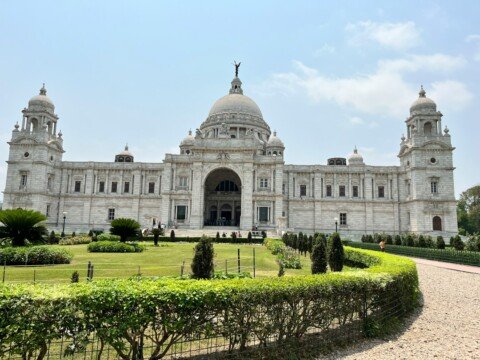
The bridge sits right beside Howrah Station, so anyone arriving by train is already at its foot. From central Kolkata, the nearest metro stations are on the Blue Line around Esplanade and MG Road, from where it is a short auto or walk down to Fairlie Ghat and the riverside. Ferries connect several ghats on both banks directly under or near the bridge. If you are planning a wider day out that also covers Victoria Memorial, Park Street, and other landmarks, our complete guide to things to do in Kolkata lays out how to sequence a day around the city’s main sights, and our Victoria Memorial visitor guide covers the other major heritage stop most itineraries pair with a bridge visit.
Frequently Asked Questions
Is photography allowed on Howrah Bridge?
Casual photography from public areas like ferries, ghats, and footpaths is commonly practised, though rules have shifted over the years and tripods, drones, or professional shoots can require permission. Check locally before you go if you are planning anything beyond a quick phone photo.
What is Howrah Bridge’s official name?
It was officially renamed Rabindra Setu in 1965 after the poet Rabindranath Tagore, though almost everyone, including most official signage and maps, still refers to it as Howrah Bridge.
Can you walk across Howrah Bridge?
Yes. The bridge has footpaths on both sides and is regularly used by pedestrians commuting between Kolkata and Howrah, in addition to being a popular short walk for visitors wanting a close look at the structure.
What is the best time of day to photograph Howrah Bridge?
Early morning shortly after sunrise and the hour around sunset both give softer light and cooler temperatures than midday, along with less traffic congestion on the approach roads.
How do I get to Howrah Bridge by metro?
The closest Blue Line stations are around Esplanade and MG Road, from where it is a short auto-rickshaw ride or walk to the riverside near Fairlie Ghat and Howrah Station.
Official background on the bridge’s construction and administration is available from the National Portal of India and from Syama Prasad Mookerjee Port, Kolkata, the government body responsible for the bridge’s upkeep.