


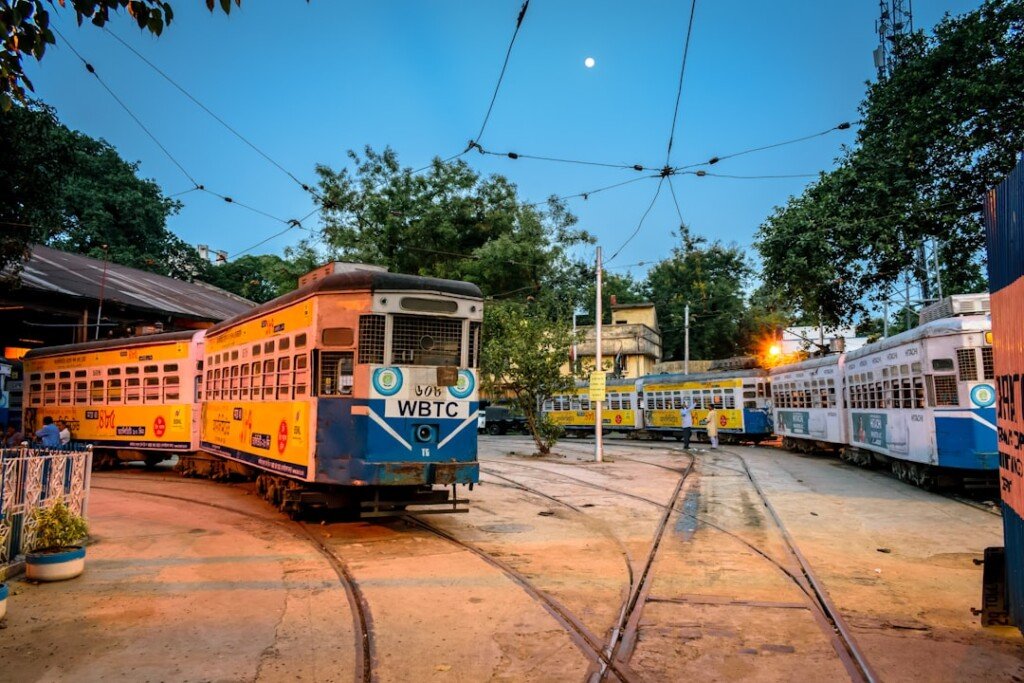

Kolkata is the only city in India where trams still run, and in 2026 two routes remain in daily service: Route 5 between Esplanade and Shyambazar, and Route 25 between Gariahat and Esplanade. A regular non-AC Kolkata tram ride costs as little as Rs 5 to Rs 10 depending on distance, while the special air-conditioned heritage tram, which loops through the older parts of North and Central Kolkata, costs around Rs 20 a ticket. Trams have operated here since 1902, making this the oldest electric tram network in Asia and the last surviving one in the country. Whether you want a cheap, unhurried way to cross part of the city or a nostalgic sightseeing ride past Jorasanko Thakurbari, Nakhoda Masjid, and College Street, this guide covers the current routes, fares, boarding tips, and where to catch a tram in Kolkata.
Which Kolkata Tram Routes Are Still Running?
Kolkata’s tram network once covered dozens of routes across the city, but only two remain operational for regular commuter service. Both are run by the West Bengal Transport Corporation (WBTC) and use the older, non-AC tram cars for day-to-day trips.
Route 5: Esplanade to Shyambazar
This route runs through Central and North Kolkata, connecting the Esplanade tram depot near Dharmatala with the busy Shyambazar five-point crossing. It passes close to College Street, so it is a handy, low-cost option if you are already exploring the College Street book market area and want to continue north.
Route 25: Gariahat to Esplanade
This route links the Gariahat shopping and market area in South Kolkata to Esplanade in the heart of the city, running roughly parallel to some Metro and bus corridors. It is a slower alternative to the Kolkata Metro or a bus, but a pleasant one if you are not in a hurry.
Tram schedules and even route continuity have changed frequently in recent years as WBTC reviews maintenance costs and road conditions, so it is worth confirming with a conductor or at the depot that a route is still running before planning a trip entirely around it.
How Much Does a Kolkata Tram Ticket Cost?
Fares on the regular non-AC trams are distance-based but stay low, typically ranging from about Rs 5 to Rs 10 for most journeys on Route 5 or Route 25 — confirm the current fare with the conductor when boarding, since small revisions do happen. Tickets are issued on board; there is no need to buy them in advance or at a counter. The air-conditioned heritage tram charges a flat fare of around Rs 20 per ride, reflecting its shorter, more scenic route rather than distance travelled.
How to Ride the Kolkata Heritage AC Tram
Alongside the two commuter routes, WBTC occasionally runs a dedicated air-conditioned heritage tram aimed at tourists and tram enthusiasts. It departs from the Esplanade tram depot and loops through some of North and Central Kolkata’s most historic lanes, passing landmarks such as Jorasanko Thakurbari (Rabindranath Tagore’s ancestral home), Nakhoda Masjid, Star Theatre, and the College Street book market. Tickets are usually sold directly by the conductor on the day, and advance booking is generally not required, though the heritage tram does not run on a fixed daily schedule — check at the Esplanade depot or with the Calcutta Tram Users Association (CTUA) for the current timetable before turning up. A few private tour operators also package the heritage tram ride as part of a guided city tour, which can be a good option if you would rather not track down timings yourself.
Best Things to See From a Kolkata Tram Window
Part of the appeal of riding a Kolkata tram is simply what rolls past the window at a gentle pace:
- Esplanade and the edge of the Maidan, Kolkata’s largest urban green space, near the Victoria Memorial area
- The old book stalls and college buildings along College Street
- Shyambazar’s landmark five-point crossing with its statue of Netaji Subhas Chandra Bose on horseback
- The markets and residential charm around Gariahat
- Glimpses of colonial-era buildings and tramlines that once crisscrossed the whole city
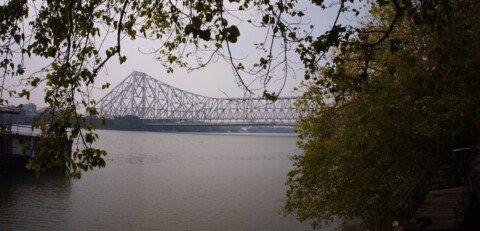
If you are building a longer day out, pair a tram ride with nearby stops from our complete guide to things to do in Kolkata or a walk across the Howrah Bridge, which is a short auto or taxi ride from the Esplanade tram terminus.
Smaranika Tram Museum: A Hidden Gem at Esplanade Depot
Tucked inside the Esplanade Tram Depot at 6, Esplanade East, the Smaranika Tram Museum is a restored 1938 tramcar (CTC-142) that now houses a small café in its first-class section and a compact museum of tram memorabilia in the second-class section. It sits barely a couple of minutes’ walk from Esplanade Metro station — walk toward Dharmatala crossing, turn near the KC Das sweet shop, and follow the tram lines in. It is easy to combine with boarding either Route 5 or Route 25, since both start or pass through this depot.
Why Kolkata’s Tram Network Has Shrunk Over the Years
At its peak, Kolkata’s tram system had dozens of routes covering much of the city. Over recent decades, road-widening projects, traffic congestion, and the cost of maintaining tracks and overhead wires led WBTC to progressively suspend routes, leaving only a handful of lines and, more recently, just Route 5 and Route 25 in regular service. Advocacy groups such as the Calcutta Tram Users Association have pushed to preserve what remains as a heritage transit system rather than let it disappear entirely, arguing that Kolkata’s trams are both a low-emission transport option and a piece of living history found nowhere else in India.
Tips for First-Time Tram Riders in Kolkata
- Board and alight only at recognized tram stops; trams do not stop on request everywhere.
- Carry small change — conductors issue paper tickets on board and may not always have change for large notes.
- Avoid peak evening traffic hours if you want a smoother, less crowded ride, since trams share the road with cars and buses.
- Don’t expect strict timetables; both the commuter routes and the heritage joyride can run with irregular gaps, especially during monsoon months covered in our monsoon commute guide.
- For faster point-to-point travel, compare timings against the bus route finder or the Metro rather than relying on trams alone.
For official updates on West Bengal’s public transport network, the West Bengal Transport Department is the authoritative source.
Frequently Asked Questions
Is the Kolkata tram still running in 2026?
Yes. Two commuter routes are currently active — Route 5 (Esplanade to Shyambazar) and Route 25 (Gariahat to Esplanade) — along with an occasional AC heritage joyride from the Esplanade depot. Confirm current operating status locally, since routes have been suspended or resumed in the past.
How much does a Kolkata tram ticket cost?
Regular non-AC trams typically cost around Rs 5 to Rs 10 depending on distance, paid to the conductor on board. The AC heritage tram is priced at roughly Rs 20 per ride. Treat these as approximate and confirm the exact fare when boarding.
Where can I ride the Kolkata heritage tram?
The heritage AC tram departs from the Esplanade tram depot, near Esplanade Metro station and the Smaranika Tram Museum. It does not run on a strict daily timetable, so check with WBTC staff at the depot or the Calcutta Tram Users Association for current days and times.
Is Kolkata the only city in India with trams?
Yes. Kolkata is the last city in India with an operational tram network, and it is also the oldest electric tram system in Asia, running continuously since 1902.
Can tourists use trams to see Kolkata’s sights?
Yes, particularly the heritage AC joyride, which is designed for sightseeing and passes several historic landmarks in North and Central Kolkata. The regular Route 5 and Route 25 services are commuter trams but still pass useful areas like College Street and Gariahat, making them a cheap way to combine transport with sightseeing.