


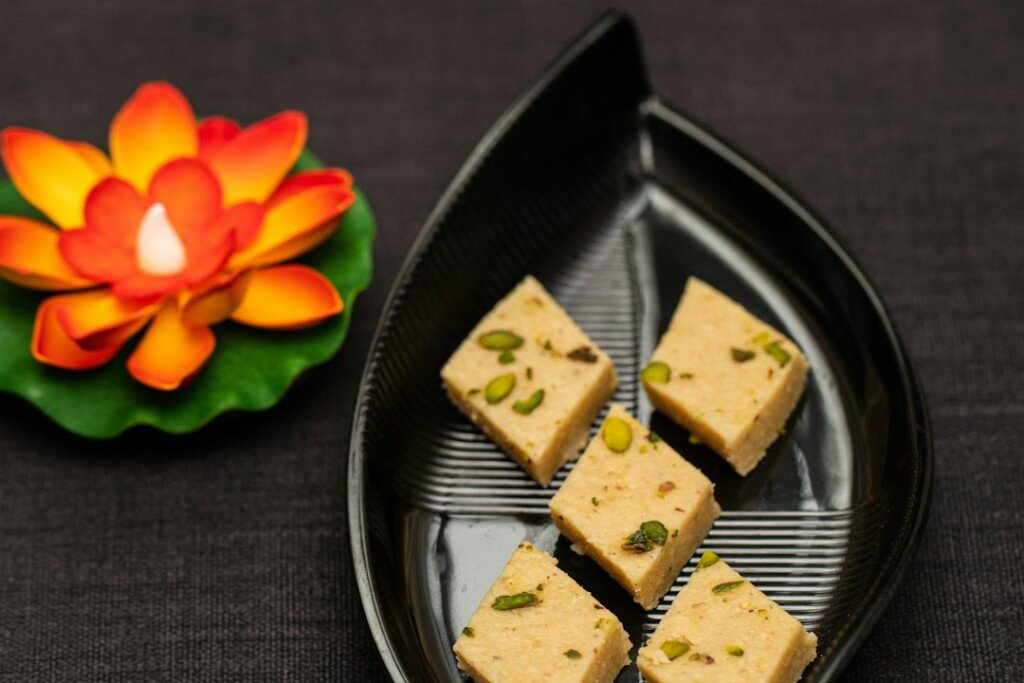

Nolen gur is the date palm jaggery that arrives in Kolkata each winter, and it is the reason Bengali sweet shops fill up from roughly December to February. Made from the sap of date palm trees, it has a dark, caramel-like sweetness with a faint smoky edge that ordinary sugar cannot match. It goes into nolen gurer sandesh, nolen gurer rosogolla, jolbhora sandesh, kachagolla, monohora and the GI-tagged Joynagarer moa. The best way to enjoy it is to buy fresh from an established mishti shop, eat it within a day or two, and look for a pale brown colour and soft texture rather than a deep, sticky sweetness. This nolen gur Kolkata guide explains what the jaggery is, when the season runs, which sweets to try, which shops are known for them, and how to spot a poor imitation. For the wider sweet shop picture, see our Bengali sweets shop guide.
What Is Nolen Gur?
Nolen gur, also written notun gur, literally means new jaggery. It is made by boiling the sap collected from date palm trees, and it is considered at its best when the weather turns cold. Because the harvest is seasonal, the sweets made from it are seasonal too, which is why many Kolkata families treat the first nolen gur sandesh of the year as a small event.
The flavour is rounder and more complex than refined sugar. Sweet shops use it to colour and flavour chhana (fresh curd cheese), milk and rice preparations, giving the finished sweet a light brown tone and a gentle smoky note.
When Is Nolen Gur Season in Kolkata?
The season follows winter. Expect the first nolen gur sweets to appear in shop counters around early to mid December, with peak availability through January and the weeks around Makar Sankranti and Poush Parbon in mid January. Supply tapers off as the weather warms in February. Exact timing shifts with the weather each year, so if you are travelling specifically for these sweets, check with a shop before you go. If you are planning a winter trip, our best time to visit Kolkata guide has month-by-month weather and festival notes.
Best Nolen Gur Sweets to Try
Nolen gurer sandesh and kachagolla
Sandesh made with nolen gur is the classic winter sweet. Kachagolla is the softer, barely-set version of sandesh that is shaped while the chhana is still tender, and it is a favourite when gur is in season. A good piece should be soft and pale brown, not hard or overly dark.
Nolen gurer rosogolla
In this version the spongy rosogolla is dipped in a brown nolen gur syrup, so the sweetness is deeper than the usual white syrup rosogolla. It is best eaten fresh and slightly chilled.
Jolbhora sandesh
Jolbhora means filled with liquid. These sandesh have a nolen gur syrup centre that bursts when you bite in. Eat them whole and soon after purchase, because the filling can leak if they sit for long.
Monohora and payesh
Monohora is a traditional gur-based sweet, and nolen gurer payesh is a creamy rice pudding that many families make at home in winter. Some shops and restaurants add it to their winter menus.
Joynagarer moa
Joynagarer moa is a ball of puffed rice (khoi), nolen gur and cardamom, often with raisins, named after Joynagar in South 24 Parganas. It has received a Geographical Indication (GI) tag, so genuine pieces are tied to that region. Buyers should be aware that look-alikes made elsewhere are sold in the city, so buy from shops that name their source.
Pithe and patishapta
Around Makar Sankranti, homes and some sweet shops make pithe, including patishapta, a thin crepe rolled around a coconut or kheer filling sweetened with nolen gur. These are seasonal rather than year-round items.
Where to Buy Nolen Gur Sweets in Kolkata
Several long-established shops make nolen gur sweets each winter. The list below is a starting point, and availability varies by branch and day, so call ahead for a specific item.
Balaram Mullick & Radharaman Mullick is known for winter rosogolla and baked (makha) sandesh, with multiple branches including Bhowanipore. Nalin Chandra Das & Sons and Girish Chandra Dey & Nakur Chandra Nandy are old North and Central Kolkata names often listed for nolen gur sandesh. Putiram at College Street, covered in our historic eateries of Kolkata guide, sells seasonal sweets and savouries. Mouchak and Banchharam’s are commonly mentioned for Joynagarer moa, and Sen Mahasay and Hindusthan Sweets are other familiar names for winter mishti.
For more shops and a comparison of everyday sweets, read our Bengali sweet shops guide.
How to Spot Real Nolen Gur Sweets
Some sweets labelled nolen gur are made with ordinary sugar syrup, caramel colour or other jaggery substitutes. A few simple checks help.
First, look at the colour. Real gur sandesh is usually a pale to medium brown, not dark and glossy. Second, check the texture. Poor chhana turns the sweet hard or grainy, and it soaks up syrup unevenly. Third, taste for smokiness. If the sweet tastes only sugary with no depth, it is likely not made with fresh gur. Fourth, buy in season. Outside winter, be wary of any shop promising fresh nolen gur sweets. Finally, ask the shop where their gur comes from, which established shops are usually happy to answer.
Savoury Winter Treats to Pair With Your Sweets
Winter in Kolkata is also the season for phulkopir singara (cauliflower samosa) and koraishutir kochuri (green pea kochuri). Many of the same sweet shops sell both, so you can plan one stop for a savoury snack and a box of mishti. For evening eating, see our Park Street after dark food guide, and if you plan to pick up woollens on the same trip, our winter shopping guide covers where to go.
Practical Tips for Buying and Carrying Nolen Gur Sweets
Buy small quantities and eat within a day or two, since chhana sweets are best fresh and most are not meant to be stored for long. Keep them chilled if you cannot eat them straight away. For travel, ask the shop to pack in a sturdy box with a cooling arrangement if available, and avoid carrying soft sweets on long journeys in warm weather. Prices vary by shop and by sweet, so check the current rate per piece or per kilogram at the counter before you order a large box.
For general background on Kolkata’s winter food, the Incredible India winter delicacies page is a useful official reference.
Frequently Asked Questions About Nolen Gur in Kolkata
When can I get nolen gur sweets in Kolkata?
Generally from around December through January, with some availability into early February. The exact start depends on how cold the weather is that year.
What is the difference between nolen gur and ordinary jaggery?
Nolen gur comes from date palm sap and is a seasonal winter product with a distinctive smoky sweetness. Ordinary jaggery is usually made from sugarcane and is available year round.
Which nolen gur sweet should a first-timer try?
Start with nolen gurer sandesh or kachagolla, then try a nolen gurer rosogolla. Add Joynagarer moa if you enjoy a chewy, cardamom-scented sweet.
Can I take nolen gur sweets home on a trip?
Dry items such as Joynagarer moa travel best. Fresh chhana sweets are better eaten within a day or two, so buy those closer to your departure and keep them cool.
Is nolen gur safe for diabetics?
Nolen gur is still a form of sugar, so people managing diabetes should ask their doctor before eating these sweets and should keep portions small.