


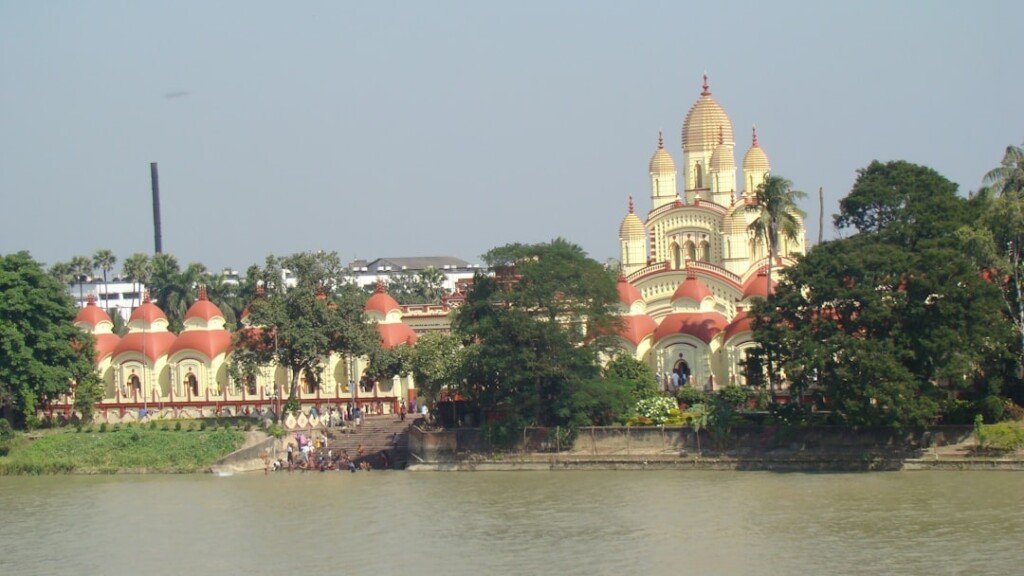

Dakshineswar Kali Temple and Belur Math sit on opposite banks of the Hooghly River, roughly 4 km apart, and together form one of Kolkata’s most rewarding half-day trips. Dakshineswar, associated with the saint Ramakrishna Paramahamsa, draws devotees for its riverside ghat and evening aarti, while Belur Math, headquarters of the Ramakrishna Mission, is known for its unusual architecture that blends Hindu, Islamic, and Christian temple styles. Both are open daily, free to enter, and easy to reach by metro, road, or a short ferry ride across the river. The most efficient plan is to visit Dakshineswar first via metro, then cross the Hooghly by ferry to Belur Math, avoiding Kolkata’s road traffic entirely. Plan for two to three hours at each site, and aim for either the early morning or the evening aarti for the calmest experience.
Dakshineswar Kali Temple: Timings and Entry Fee
Dakshineswar Kali Temple has no entry fee, though voluntary donations are welcome. Visiting hours change slightly with the season:
- April to September: 6:00 am to 12:30 pm, then 3:30 pm to 9:00 pm
- October to March: 6:00 am to 12:30 pm, then 3:00 pm to 8:30 pm
The temple closes for a few hours around midday for rituals, so time your visit for the morning or evening window rather than early afternoon. Evening aarti draws the largest crowds and is worth planning around if you want to witness it, though it also means longer queues near the main shrine.
Belur Math: Timings and Entry Fee
Belur Math is also free to visit, with donations accepted for the Ramakrishna Mission’s charitable work. Its hours run close to Dakshineswar’s:
- April to September: 6:30 am to 11:30 am, then 4:00 pm to 9:00 pm
- October to March: 6:30 am to 11:30 am, then 3:30 pm to 8:30 pm
The sprawling, well-kept campus includes the main temple, Ramakrishna’s shrine, museum sections, and gardens along the river, so unlike Dakshineswar’s compact courtyard, Belur Math rewards a slower, longer walk. Modest dress is expected at both sites: cover shoulders and knees, and be ready to remove footwear before entering temple areas.
How to Reach Dakshineswar from Kolkata
The easiest option by far is the Kolkata Metro. Dakshineswar Metro Station, the northern terminus of the Blue Line, sits right beside the temple complex, so there’s no onward auto or taxi needed once you exit the station. For a full breakdown of the network, see our Kolkata Metro route guide.
If you’d rather go by road, taxis and app-cabs from central Kolkata typically take 30 to 40 minutes depending on traffic, and the nearest suburban rail stop, Dakshineswar railway station, is about a five-minute walk from the temple gate.
How to Reach Belur Math from Kolkata and Howrah
Belur Math sits about 9 km from central Kolkata and roughly 6 km from Howrah, around a 30-minute drive from either. Bus numbers 51, 54, and 56 run from Howrah Station directly to the Math, while AC bus 50 connects from Garia, the EM Bypass, Science City, the airport, and Dakshineswar. Local trains to Belur or Bally stations are another option, followed by a short auto ride. For general commuting options across the city, our guide to commuting apps in Kolkata covers booking cabs and autos reliably.
The Best Way to Combine Both Visits: The Hooghly Ferry
Rather than backtracking through the city, cross the river directly. A passenger ferry links the Dakshineswar ghat to the Belur Math ghat, running roughly every 30 minutes through the day, with the last crossing generally around 7:30 pm. The ride takes about 15 to 20 minutes and costs somewhere in the range of Rs 10 to Rs 20 per person — confirm the current fare at the ghat counter, as small revisions happen from time to time. This crossing turns what would otherwise be an hour-long road detour into a scenic 20-minute hop, and it’s the approach most local guides and regular visitors recommend. For more on the city’s river transport network, see our guide to ferry routes across the Hooghly.
Suggested Half-Day Itinerary
- Take the metro to Dakshineswar in the morning, ideally soon after opening to beat the crowds.
- Spend an hour to 90 minutes at the temple, including the riverside ghat.
- Walk to the Dakshineswar ferry ghat and cross to Belur Math.
- Spend two hours exploring the Belur Math campus, including the main temple and gardens.
- Return to Howrah or central Kolkata by bus, taxi, or local train.
This loop pairs naturally with a wider day of sightseeing; if you’re planning a longer stay, our one-day and weekend itinerary guide and our roundup of things to do in Kolkata can help you slot this trip alongside other neighborhoods and attractions.
Visitor Tips and Etiquette
- Photography is generally restricted inside the main shrines at both sites; check posted signage before taking pictures.
- Footwear must be removed before entering temple buildings — keep a cloth bag or wear easily removable shoes.
- Weekends and festival days, especially around Kali Puja and Durga Puja, bring significantly larger crowds than weekdays.
- Carry small change for ferry fares and donations, since counters aren’t always set up for cards.
- Both sites involve a fair amount of walking and standing in queues, so comfortable footwear is worth prioritizing over anything else.
For official updates on rituals, special events, or temporary closures, the Ramakrishna Mission’s official Belur Math website and the West Bengal Tourism portal are the most reliable sources.
Frequently Asked Questions
Is there an entry fee for Dakshineswar or Belur Math?
No. Both sites are free to enter. Donations are welcomed but never required, and there’s no ticket counter to pass through at either location.
How do I get from Dakshineswar to Belur Math?
The quickest and most scenic option is the passenger ferry that crosses the Hooghly directly between the two ghats in about 15 to 20 minutes. Driving around by road takes considerably longer due to the river crossing points available.
Which is better to visit first, Dakshineswar or Belur Math?
Most visitors start at Dakshineswar since it’s directly served by the metro, then cross by ferry to Belur Math in the afternoon. This avoids retracing your route and times the visit so you’re not rushing through either site.
Can I visit both temples in a single day trip from central Kolkata?
Yes. Starting in the morning, most visitors comfortably cover both sites and are back in the city by early evening, especially if they use the metro and ferry combination described above rather than road transport for the full loop.
What should I wear to visit Dakshineswar and Belur Math?
Modest clothing that covers shoulders and knees is expected at both sites. Footwear needs to come off before entering the temple buildings, so shoes that slip on and off easily make the visit more comfortable.