


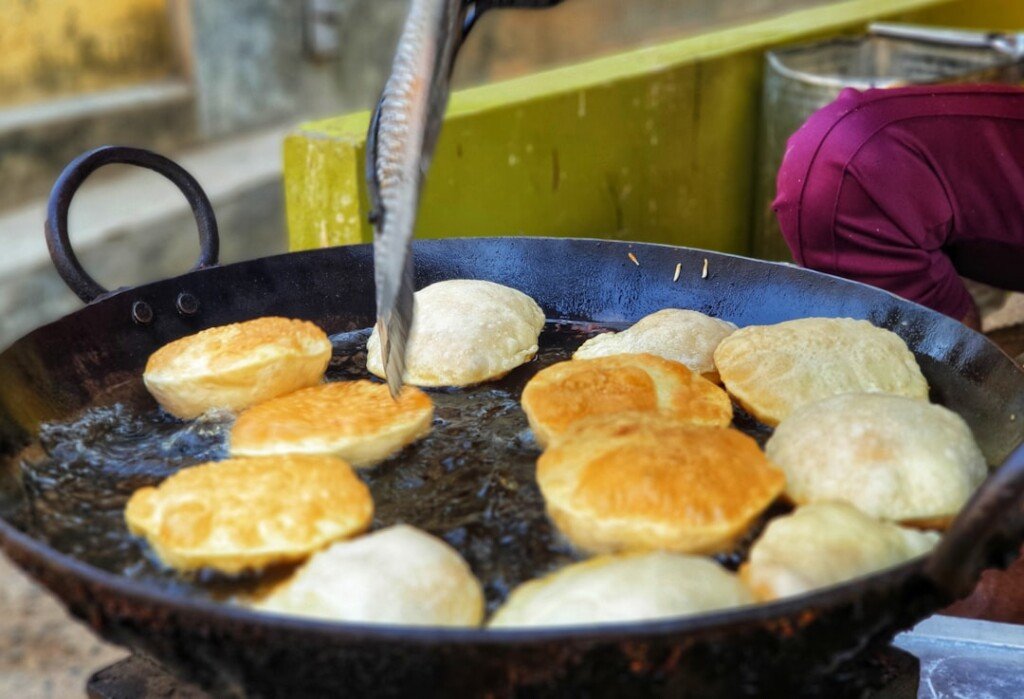

Breakfast in Kolkata starts early and ends fast. The city’s morning food culture runs on a handful of dishes sold from small shops that open around 6 am and are frequently sold out well before 9: kochuri (a deep-fried flatbread served with spiced potato curry), radhaballavi (a puri stuffed with spiced urad dal, usually paired with sweetish cholar dal), and singara, all washed down with strong milk tea. Legacy names like Putiram near College Street, Maharani on Sarat Bose Road and Mohan Bhandar on S. N. Banerjee Road are where locals queue. Beyond the Bengali template, the city keeps two other distinct morning traditions alive: the Sunday-only Chinese breakfast market at Tiretti Bazaar in old Chinatown, and the colonial-era bakery breakfast on Park Street. A filling Bengali breakfast typically costs a modest amount per head, while a sit-down bakery meal costs several times more. Timing matters far more than budget here.
What a Traditional Bengali Breakfast in Kolkata Actually Looks Like
There is no single Bengali breakfast plate, but there is a recognisable pattern. Most morning shops in the city sell some combination of the following, served on a sal-leaf plate or a paper plate, eaten standing up.
- Kochuri: a small, puffed, deep-fried bread. The plain version comes with aloor torkari or aloor dum. The seasonal winter favourite is koraishutir kochuri, stuffed with mashed green peas and scented with asafoetida.
- Radhaballavi: a richer cousin of the kochuri, stuffed with a spiced urad dal paste and traditionally served with cholar dal studded with coconut.
- Singara: the Bengali samosa, usually filled with potato and cauliflower in winter. Sold all day, but freshest in the morning batch.
- Luchi with alur dom: the home-style version, more common at sit-down tiffin shops than at street counters.
- Dim toast and bread butter: the tea-shop breakfast, an egg-soaked fried bread that pairs with cutting chai.
- Mishti: many of these shops are sweet shops first. A rosogolla or a fresh kachagolla after the savoury course is standard practice, not indulgence.
If you want the wider picture of how the city eats through the day, our complete Kolkata food guide covers lunch, dinner and everything between.
Best Places for Kochuri and Radhaballavi
Putiram, College Street
Operating near College Street since the late nineteenth century, Putiram is the name most often cited when Kolkatans talk about morning kochuri. The draw is kochuri with potato curry and, in season, phulkopir singara. Arrive between roughly 6 am and 7:30 am for the freshest batch. The surrounding College Street book market does not properly wake up until later, so breakfast first and browsing second is the sensible order.
Maharani, Sarat Bose Road
A south Kolkata institution for kochuri with aloor dum, Maharani is the go-to for residents of Bhowanipore, Lansdowne and Ballygunge. It is a tiffin counter rather than a restaurant, so plan to eat quickly and move on.
Mohan Bhandar, S. N. Banerjee Road
One of the busiest kochuri counters in central Kolkata, convenient if you are staying near Esplanade, Chandni Chowk or New Market. The queue is genuinely long on weekday mornings, which is usually a reliable signal.
Neighbourhood sweet shops
Some of the best kochuri in the city has no name recognition at all. Nearly every para has a sweet shop that fries a morning batch, and the quality is often excellent. If you are staying anywhere residential, ask at the nearest mishtir dokan before travelling across town. Our guide to Kolkata’s best Bengali sweet shops lists the heritage names worth a detour.
Sunday Chinese Breakfast at Tiretti Bazaar
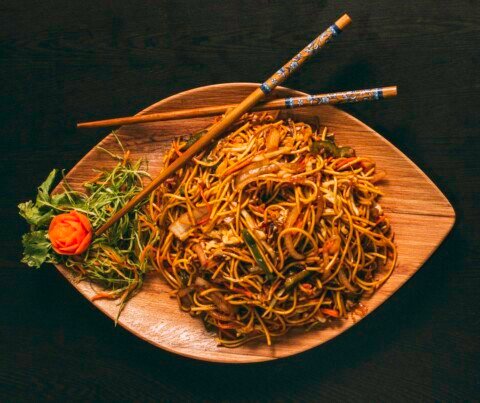
Kolkata’s old Chinatown around Tiretti Bazaar, near Poddar Court and Central metro station, hosts one of India’s most unusual morning food markets. For a couple of hours each morning, and most fully on Sundays, vendors from the city’s Chinese community sell home-made dumplings, momos, baos, fish-ball soup, sausages and pork buns from folding tables on the street.
The practical points matter here. The market typically runs from around 6 am to 8 am on weekdays and slightly later on Sundays, but the best selection goes to whoever turns up first, and regulars arrive closer to 5:30 am. Popular items sell out early. Bring cash in small notes, and do not expect seating. This is standing, street-side eating.
If you enjoy it, the fuller sit-down version of Kolkata’s Chinese food scene is in Tangra, covered in our Tangra Chinese food guide.
Bakery and Cafe Breakfast: Park Street and New Market
For a slower, seated morning, central Kolkata has a small cluster of colonial-era bakeries and tea rooms.
- Flurys, Park Street: the classic Kolkata breakfast address, open from the early morning and known for its full breakfast platters, pastries and coffee. It fills up quickly on weekends, so arrive early if you want a table by the window.
- Nahoum and Sons, New Market: a Jewish bakery inside Hogg Market, better thought of as a takeaway stop than a breakfast venue. It opens mid-morning and the popular items, particularly the fruit cake and macaroons, go fast.
- Independent cafes: Kolkata now has a solid set of cafes serving eggs, sandwiches and filter coffee from around 9 am, especially in Southern Avenue, Hindustan Park and Salt Lake. Our roundup of the best cafes in Kolkata for work or study covers which ones have Wi-Fi and power points.
For the older restaurants that also serve morning fare, see our guide to historic Kolkata eateries, including Indian Coffee House and Dilkhusa Cabin.
How Much Does Breakfast in Kolkata Cost?
Kolkata remains one of the cheapest major Indian cities for street breakfast, though prices have moved upward in recent years and vary shop to shop. As a general guide, a plate of two kochuris with curry at a neighbourhood counter sits in the low double digits in rupees, a radhaballavi plate a little above that, and a cup of tea is nominal. Tiretti Bazaar items are usually priced per piece or per small bowl and add up quickly if you sample widely. A seated breakfast at a Park Street bakery costs several hundred rupees per person once coffee is included.
Treat all of these as ranges rather than fixed figures. Confirm current pricing at the counter before ordering, especially at heritage shops where seasonal items are priced differently. For a broader sense of what daily food costs in the city, see our breakdown of the cost of living in Kolkata for students.
Breakfast by Area: North, Central and South Kolkata
North Kolkata is the strongest area for traditional morning food. College Street, Shyambazar, Hatibagan and Bagbazar all have long-running sweet shops and tiffin counters, and the density means you are rarely more than a few minutes from a fresh batch.
Central Kolkata gives you the widest variety in the smallest radius: kochuri counters near Esplanade, the Chinese breakfast market at Tiretti Bazaar, and the Park Street bakeries, all within a short walk or one metro stop of each other.
South Kolkata leans more towards cafes and modern breakfast menus, with Sarat Bose Road, Gariahat and Jadavpur retaining strong traditional counters alongside them. Salt Lake and New Town are the weakest for old-school breakfast but the best for chain cafes and hotel buffets.
Practical Tips Before You Go
- Go early. Most traditional counters fry a limited morning batch. By 9 am the good stuff is gone at the well-known shops.
- Carry cash. Many small counters and street vendors still prefer cash, and some do not accept UPI at peak rush.
- Check the day. Some heritage shops close one day a week, and the Tiretti Bazaar market is at its fullest on Sunday. Ring ahead or check current timings before making a special trip.
- Plan the transport. The Blue Line metro covers College Street (Mahatma Gandhi Road), Central and Park Street, which makes a morning food crawl straightforward. See our Kolkata metro route guide for line details and first-train timings.
- Eat where it is busy. High turnover means fresh oil and fresh frying, which is the single best hygiene signal at a street counter.
For more on the wider street food scene beyond breakfast hours, read our Kolkata street food guide. Official city and state tourism information, including seasonal food festivals, is published by West Bengal Tourism.
Frequently Asked Questions
What time does breakfast start in Kolkata?
Traditional kochuri and radhaballavi shops typically start selling between 6 am and 7 am and often run out by mid-morning. Cafes and bakeries open later, generally between 7:30 am and 9:30 am depending on the venue.
What is the difference between kochuri and radhaballavi?
Both are deep-fried breads, but the stuffing differs. Kochuri is usually plain or filled with spiced peas, and is served with potato curry. Radhaballavi is stuffed with a spiced urad dal paste and is traditionally paired with cholar dal, making it the richer of the two.
Where can I get Chinese breakfast in Kolkata?
At the Tiretti Bazaar street market in old Chinatown, near Poddar Court in central Kolkata. It operates for a short window in the early morning, is fullest on Sundays, and sells dumplings, baos, momos and soups from temporary street stalls.
Is street breakfast in Kolkata safe for visitors?
Generally yes, if you choose busy counters where food is fried to order and turnover is high. Freshly fried items are lower risk than anything sitting out. Avoid pre-cut fruit and uncooked chutneys if you have a sensitive stomach, and stick to bottled or filtered water.
Are there vegetarian breakfast options in Kolkata?
Most of the traditional Kolkata breakfast is vegetarian by default. Kochuri, radhaballavi, singara, luchi with alur dom and the accompanying sweets contain no meat, and many of the heritage sweet shops are entirely vegetarian kitchens.