


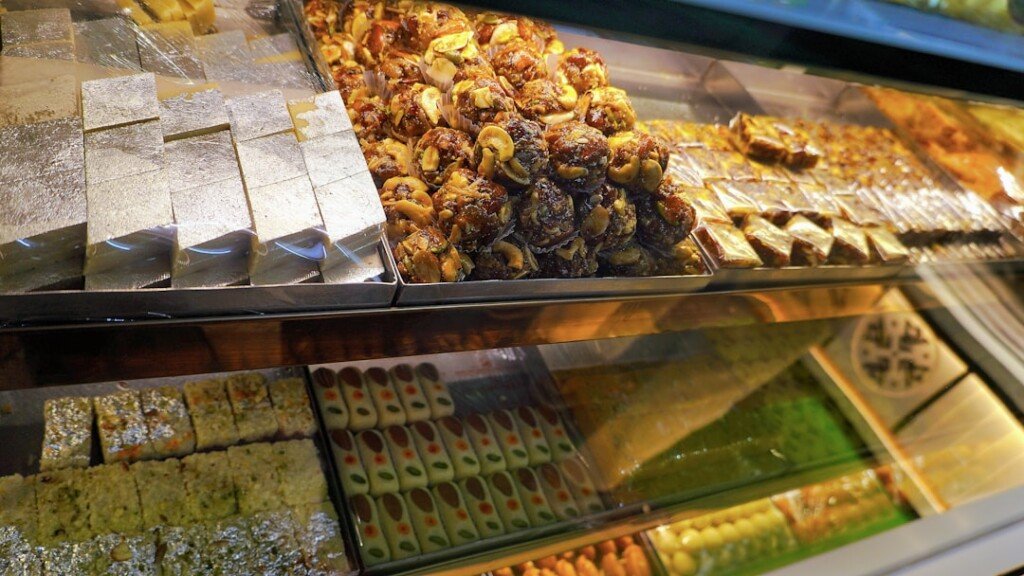

Kolkata’s best Bengali sweet shops are its oldest ones: K.C. Das near Esplanade, built on the family that invented rosogolla in 1868; Girish Chandra Dey & Nakur Chandra Nandy in Hatibagan, the city’s most respected name in sandesh; Balaram Mullick & Radharaman Mullick, with branches across the city and a menu that stretches classic sweets into modern versions like baked rosogolla; and Bhim Chandra Nag in Bowbazar, home of the ledikeni. Between them, these Bengali sweet shops in Kolkata cover the full range worth trying: rosogolla, sandesh in its dozen-odd forms, mishti doi (sweetened set yogurt), and seasonal nolen gur (date palm jaggery) versions available roughly November through February. This guide covers where each shop is, what to order there, roughly what it costs, and how to plan a short sweet shop crawl without overdoing it.
Where Rosogolla Was Born: K.C. Das and the Bagbazar Legacy
Rosogolla traces back to Nobin Chandra Das, a confectioner who opened a shop in Bagbazar, North Kolkata, in 1866 and is credited with creating the spongy, syrup-soaked chhana ball in 1868. His son Krishna Chandra Das later built the K.C. Das brand, introducing canned rosogolla that could travel and eventually reach shops worldwide. The main K.C. Das outlet today sits near Esplanade East, and it remains one of the most reliable places in the city to get textbook rosogolla: light, spongy, not overly sweet, served fresh in syrup rather than packaged. The shop also makes chomchom, lalmohan (a drier, fried cousin of gulab jamun), and its own mishti doi. In November 2017, the Geographical Indication Registry of India granted West Bengal the GI tag for “Banglar Rosogolla,” formally settling a long dispute with Odisha over the sweet’s origin; November 14 is now marked as Rosogolla Day across the state.
Girish Chandra Dey & Nakur Chandra Nandy: Kolkata’s Sandesh Specialists
Founded in 1844 on Ramdulal Sarkar Street near Hatibagan, this shop has stayed narrowly focused for close to two centuries: sandesh only, no syrup-based sweets. That focus is exactly why Bengalis rate it so highly. Sandesh here comes in dozens of forms, from plain, lightly sweetened kanchagolla to elaborately molded, saffron- or fruit-flavoured versions sold by weight or piece. If you want to understand what makes good sandesh different from an average one, this is the shop to use as the benchmark: it should taste of fresh chhana first and sugar second, with a texture that’s soft but holds its shape.
Balaram Mullick & Radharaman Mullick: Tradition Meets Modern Twists
Started in 1885 by two brothers, this shop has grown into one of Kolkata’s most widely available sweet chains, with its flagship on Prince Anwar Shah Road in Lake Gardens and branches in several other neighbourhoods. It carries the full classic range (sandesh, rosogolla, mishti doi, and nolen gur versions of both in winter) alongside experiments that blend Bengali technique with Western dessert ideas, such as baked rosogolla, gur souffle, and baked mihidana. It’s a good stop if you want to sample both tradition and innovation in one visit, or if you’re not near North Kolkata and want a reliable South Kolkata option instead.
Bhim Chandra Nag: Home of the Ledikeni
Founded in 1826 in Bowbazar (on what’s now Nirmal Chandra Street, with a second outlet on Vivekananda Road), Bhim Chandra Nag is where the ledikeni was created: a deep-fried, syrup-dipped sweet made in 1858 for Lady Canning, wife of the then Viceroy, and named after her. Nearly two hundred years on, the shop still draws a loyal, largely local crowd rather than tourist traffic, which keeps prices honest and the sweets consistently fresh. Beyond ledikeni, it’s worth trying the shop’s sandesh and its take on kheer kadam.
What Bengali Sweets Typically Cost in Kolkata
Prices vary by shop, season, and whether a sweet is sold by weight or by piece, so treat the figures below as a general starting range rather than a fixed price list, and confirm current pricing at the counter before ordering a large box.
- Rosogolla: typically sold by weight or in boxes of a set count; a modest box for two to three people is usually a fairly small spend at any of the shops above.
- Sandesh: prices climb with how elaborate the sandesh is; plain kanchagolla-style sandesh costs noticeably less than saffron, fruit, or dry-fruit stuffed varieties.
- Mishti doi: usually priced per clay pot (bhaar), with small pots being the most common single-serving option.
- Nolen gur versions of sandesh and rosogolla (roughly November to February) generally cost more than the regular versions, since jaggery from date palm sap is a seasonal, limited ingredient.
Planning a Sweet Shop Crawl
- Go in the morning if possible; sandesh and mishti doi taste best fresh, and popular shops sell through their best batches by afternoon.
- Ask for a small mixed box rather than committing to one sweet; most shops are used to this and can suggest their two or three signature items.
- Visit in winter (roughly November to February) if nolen gur sweets are a priority; outside that window, most shops don’t stock them at all.
- Carry cash for the older, smaller outlets; card and UPI acceptance has improved but isn’t universal at every counter.
- Pair a sweet shop stop with a nearby meal. North Kolkata’s sweet shops sit close to some of the city’s historic eateries and street food stops, so it’s easy to build a half-day food walk around them.
For a wider view of where locals actually eat across the city, including beyond sweets, see our full Kolkata food guide. Bengali sweets are also central to the state’s festival calendar; West Bengal Tourism has more on how food and festivals like Durga Puja intersect across the state.
Frequently Asked Questions
Where can I find the best rosogolla in Kolkata?
K.C. Das near Esplanade is the most historically direct link to the sweet’s 1868 invention and a dependable choice, though Balaram Mullick & Radharaman Mullick and Girish Chandra Dey & Nakur Chandra Nandy also make well-regarded versions.
What’s the difference between sandesh and rosogolla?
Both start from chhana (fresh curdled milk solids), but rosogolla is shaped into balls and cooked in sugar syrup, giving it a spongy, juicy texture, while sandesh is kneaded with sugar and lightly cooked or left uncooked, then molded into a firmer, drier sweet.
What is mishti doi and where should I try it?
Mishti doi is sweetened yogurt set in clay pots, traditionally caramelized with jaggery or sugar for a light brown color and slightly smoky sweetness. K.C. Das and Balaram Mullick & Radharaman Mullick both sell it fresh daily in small clay pots.
Are these Kolkata sweet shops open every day?
Most operate daily with regular shop hours, though timings can shift slightly around major festivals like Durga Puja and Kali Puja, when demand spikes and some shops extend hours instead of closing.
Is nolen gur sandesh available year-round?
No. Nolen gur (date palm jaggery) is a winter ingredient, generally available from around November through February, so nolen gur sandesh and rosogolla are seasonal items rather than a year-round menu staple.