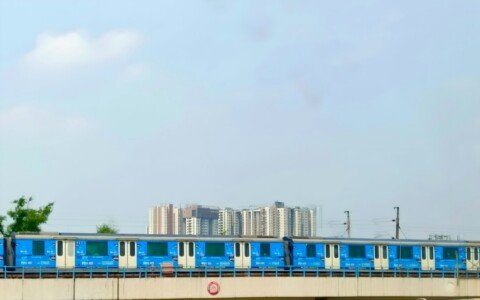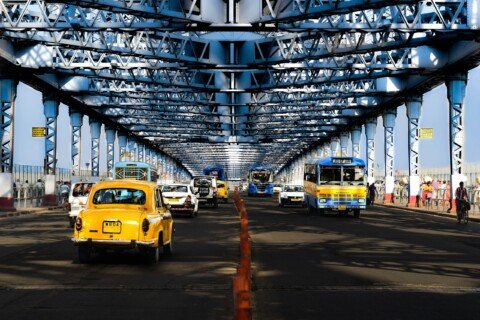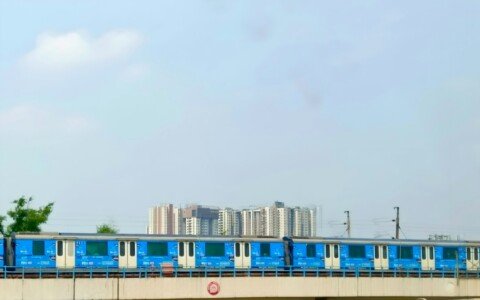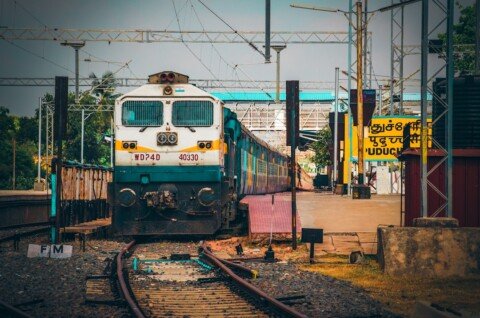



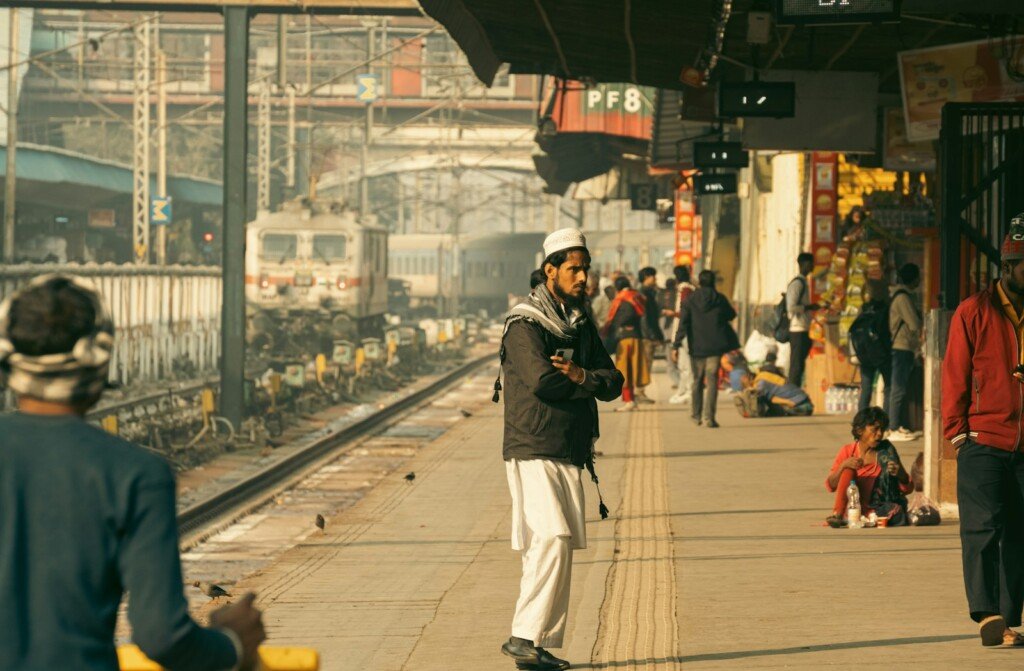

This Kolkata local train guide covers the Kolkata Suburban Railway, the cheapest and often fastest way to reach the city’s outer suburbs and satellite towns. The network runs from two main hubs, Sealdah and Howrah, both operated by Eastern Railway, plus a South Eastern Railway network from Howrah and Shalimar toward Kharagpur, Amta, Haldia and Digha. Sealdah’s lines fan out north toward Ranaghat, Bongaon, Barasat and Hasnabad, and south toward Diamond Harbour, Canning and Namkhana. Howrah’s lines run west toward Bardhaman, both via Bandel on the main line and via the shorter Howrah-Bardhaman chord line. Trains run frequently through the day, tickets can be booked in seconds on the RailOne app or at a station counter, and fares stay among the lowest of any transport mode in the city. Below is a breakdown of the lines, how to buy tickets, what to expect on board and how local trains compare to the metro and buses.
What Is the Kolkata Suburban Railway?
The Kolkata Suburban Railway is split across three divisions. Sealdah and Howrah are run by Eastern Railway, while the routes beyond Howrah toward Kharagpur, Amta, Haldia and Digha fall under South Eastern Railway’s Kharagpur division. Sealdah alone is one of the busiest terminals in the country, handling roughly 921 suburban EMU services a day alongside dozens of mail, express and passenger trains. If you live or work anywhere beyond the reach of the Kolkata Metro, from Barasat to Sonarpur to the Hooghly riverside towns, a local train is usually the quickest and cheapest way to get there.
Sealdah Division: Main, North and South Lines
Sealdah Main and North Section
The Sealdah-Ranaghat-Gede line alone covers 45 stations and carries an estimated one million passengers a day. From Sealdah, these EMU services run north through Dum Dum, Barasat and Naihati, with branches continuing toward Bongaon, Ranaghat and the Hasnabad and Basirhat lines further east. This is the section most commuters from North 24 Parganas and Nadia districts rely on daily.
Sealdah South Section
South of Sealdah, trains run via Ballygunge and Majerhat toward Budge Budge, via Sonarpur toward Canning, and via Baruipur and Lakshmikantapur toward Namkhana. These routes serve South 24 Parganas and are the usual way locals reach Sonarpur, Baruipur, Diamond Harbour and the gateway towns for the Sundarbans.
Howrah Division: Main Line, Chord Line and South Eastern Routes
From Howrah, the main line to Bardhaman runs via Bandel, a 107-kilometre route through Hooghly towns like Chinsurah, Chandannagar and Bandel itself. The Howrah-Bardhaman chord line, built in 1917, offers a shorter 95-kilometre alternative across 27 stations and is generally faster for through-travellers. Separately, the South Eastern line runs from both Howrah Junction and Shalimar, stretching 341 kilometres across 87 stations to Midnapore, Kharagpur, Amta, Haldia and Digha. This last network is operated by South Eastern Railway rather than Eastern Railway, so schedules and enquiry counters are handled separately.
How to Book Kolkata Local Train Tickets
The old UTS app was retired on 1 March 2026. RailOne is now the single official app for unreserved and suburban paperless tickets, platform tickets and season ticket bookings, and it accepts your existing UTS or IRCTC login, so there is no need to sign up again. Paper tickets and monthly season tickets (MST) are still available at station counters and ATVMs for anyone who prefers not to use the app. If you commute daily, a season ticket is worth comparing: a quarterly pass costs roughly 2.7 times the monthly fare, a half-yearly pass roughly 5.4 times, and a yearly pass roughly 10.8 times, so the longer the validity you buy, the lower your effective monthly cost.
Fares and Frequency
Second-class suburban fares are the cheapest way to travel in and around Kolkata, and recent fare rationalisation by the Ministry of Railways has kept suburban and season ticket fares unchanged. The exact rupee amount for the shortest distance slab is revised from time to time, so treat any figure you see online as approximate and confirm the current fare at the counter or on the RailOne app before you travel. On frequency, core Sealdah and Howrah routes see EMUs every few minutes during the morning and evening peaks, while outer branches and South Eastern routes run less often, so it’s worth checking the live schedule rather than assuming a fixed interval.
Tips for First-Time Riders
- Look for the reserved women’s compartment, usually marked clearly and positioned near the front or rear of the rake
- Avoid the roughly 8 to 10 am and 5 to 7 pm peak windows if you’re travelling with luggage
- Keep small change or a topped-up RailOne balance ready, since counter queues can get long at major stations
- Platform announcements and signboards are typically in Bengali, Hindi and English
- Trains halt only briefly at busy stations like Sealdah, Howrah, Dum Dum and Ballygunge, so board and alight promptly
Local Train vs Metro vs Bus: When to Use Which
Local trains make the most sense once you’re travelling beyond the Kolkata Metro’s reach, such as to Barasat, Naihati, Sonarpur, Diamond Harbour or towns along the Bardhaman corridor. Within the city core, the Kolkata Metro is faster and more frequent, and buses fill in routes that neither trains nor the metro cover directly, as detailed in our Kolkata bus route finder. If your commute involves crossing the Hooghly, it’s also worth checking our ferry routes and timings guide. For a full overview of every mode covered on this site, see our complete guide to getting around Kolkata.
Frequently Asked Questions
What is the difference between Sealdah and Howrah local trains?
Sealdah trains serve North and South 24 Parganas and Nadia district to the north and south-east of the city, while Howrah trains run west toward Hooghly and Bardhaman. They operate from separate terminals and are largely independent networks.
How do I book a Kolkata local train ticket online?
Use the RailOne app, which replaced UTS from 1 March 2026, to buy unreserved, suburban, platform and season tickets from your phone. You can sign in with your old UTS credentials or your IRCTC login.
What is the minimum fare for a Kolkata local train?
Second-class suburban fares are the lowest of any transport mode in the city and are revised periodically by Indian Railways. Rather than quoting a fixed number that can go out of date, check the current fare on the RailOne app or at the station counter before travelling.
Do Kolkata local trains have women’s compartments?
Yes, every rake has a reserved compartment for women, usually marked clearly on the outside of the coach and positioned near the front or rear of the train.
Which line should I take to reach Sonarpur or Diamond Harbour?
Both are on the Sealdah South section. Take a Sonarpur-bound or Canning-line local for Sonarpur, and a Sealdah-Diamond Harbour local to reach Diamond Harbour directly.
For official timetables and enquiry numbers, the Eastern Railway website is the authoritative source, and it’s worth bookmarking alongside this guide.