




Few announcements shape a state’s job market and skyline as much as an industrial policy, and today West Bengal is set to unveil its new one. Chief Minister Suvendu Adhikari is expected to announce the policy on Thursday, 5 November 2026, from Nabanna, the state secretariat in Howrah, after a review meeting. The cabinet cleared the draft on 28 October, so what remains is the formal release and the fine print.
For anyone living in Kolkata, this is not an abstract piece of governance. Where factories, logistics parks and warehouses come up decides where jobs appear, which suburbs grow and which parts of the state finally get investment. Here is what has been reported so far, what it could mean for the city, and what to watch for once the final document is out.
What Is Being Announced Today
According to an IANS report, the policy is built around “ease of doing business”. The stated aim is to cut unnecessary government regulations for investment proposals, speed up approvals, create a favourable climate for investors and generate employment at scale. A group of ministers was tasked with drafting it in June 2026, a few weeks after the new government took office, and consultations were held with industrialists, industry associations and economic experts.
The release has been a long time coming. It was first expected around 15 August and slipped several times. Officials linked to the West Bengal Industrial Development Corporation (WBIDC) have pointed to the difficulty of balancing investor interests, job creation and the concerns of landowners whose land would be acquired for projects.
The Incentives Reported So Far
The final terms were not public at the time of writing, so treat the following as reported expectations, not confirmed provisions. Sources in the secretariat have said the policy is likely to bring back investor incentives that were scrapped earlier, in a “more structured and comprehensive manner”. The measures mentioned include:
- A waiver of electricity tariffs during the initial years of a project’s implementation and operation. One market report put a figure of Rs 100 crore on the investment size that would qualify, but this has not been confirmed by the government.
- The state bearing part of the interest on loans taken by entrepreneurs.
- Reimbursement of the employer’s contribution to employees’ provident fund.
- A single-window clearance system to replace the current multi-step approval process, which industry has long described as slow.
- A push to steer investment towards backward districts, so that new projects support local development outside the Kolkata belt.
There is also talk of possible amendments to land laws, including the West Bengal Urban Land (Ceiling and Regulation) Act and the West Bengal Land Reforms Act, to make land available for industrial use. Whether and how this happens is the part to watch most closely, because land has historically been the hardest question in Bengal’s industrial story.
What It Could Mean for Kolkata
Kolkata is the state’s commercial heart, but much of the new factory space is likely to come up in the surrounding districts and along the highways leading out of the city. For city residents the effects tend to arrive in three ways.
First, jobs. Manufacturing, food processing, logistics and warehousing hire large numbers of people, including freshers and skilled technicians. Colleges and training institutes in and around Kolkata often feel the effect first, through campus placements and apprenticeship tie-ups.
Second, property and rentals. Industrial parks and logistics hubs on the city’s edge tend to lift demand for rental housing, PGs and small shops in the nearby neighbourhoods over time. This takes years, not weeks, and depends on projects actually being built.
Third, small businesses. Suppliers, transporters and service providers in places like Howrah, Dankuni, Barasat and Kalyani usually benefit when a large plant comes up nearby.
The city is also lining up other big economic events. See our earlier piece on Kolkata hosting India Energy Week 2027 for what that means for the city.
Caveats Worth Keeping in Mind
A policy is a promise, not a factory. Analysts quoted in market coverage have flagged the usual risks: social friction over land, environmental concerns, disputes over speculative land holding, and implementation delays that can push up project costs. Investors will also look at how quickly the single-window system actually works on the ground and whether incentives are paid on time.
Frequently Asked Questions
Who is announcing the new West Bengal industrial policy?
Chief Minister Suvendu Adhikari is expected to announce it on Thursday afternoon, 5 November 2026, from Nabanna after a review meeting.
When did the cabinet approve it?
The state cabinet cleared the draft policy on 28 October 2026.
What incentives are expected?
Reports point to electricity tariff waivers in the early years, state support on loan interest and reimbursement of the employer’s provident fund contribution, along with a single-window approval system. These are expectations until the final document is published.
Will this create jobs in Kolkata?
That is the stated goal. Actual hiring depends on how many projects are set up and how fast, so the effect will build over months and years.
Where can I read the official policy?
Once released, the full text is expected on the West Bengal government and WBIDC portals. We will update this article when the final terms are published.
Practical Tips for Job Seekers and Small Business Owners
- Wait for the official text before making financial decisions based on rumoured incentives.
- Check the WBIDC website and government portals for tenders, vendor registrations and new industrial park notices.
- If you run a small supplier business, note which sectors the policy prioritises (food processing and logistics are being discussed) and see where you can plug in.
- Be careful with agents offering “guaranteed” jobs or plots linked to the new policy. Verify everything with official sources.
The Bottom Line
The new industrial policy is one of the most closely watched announcements of the year for Bengal. The direction is clear: faster approvals, more incentives and a push for investment in less developed districts. The details, especially on land and the actual incentive amounts, will decide whether it delivers. We will update this page once the final policy is out.
Sources: reporting by IANS (via English Punjab Kesari), Whalesbook market coverage published 3 November 2026, and other press reports on the West Bengal cabinet decision of 28 October 2026. Details are based on reports published before the formal announcement.
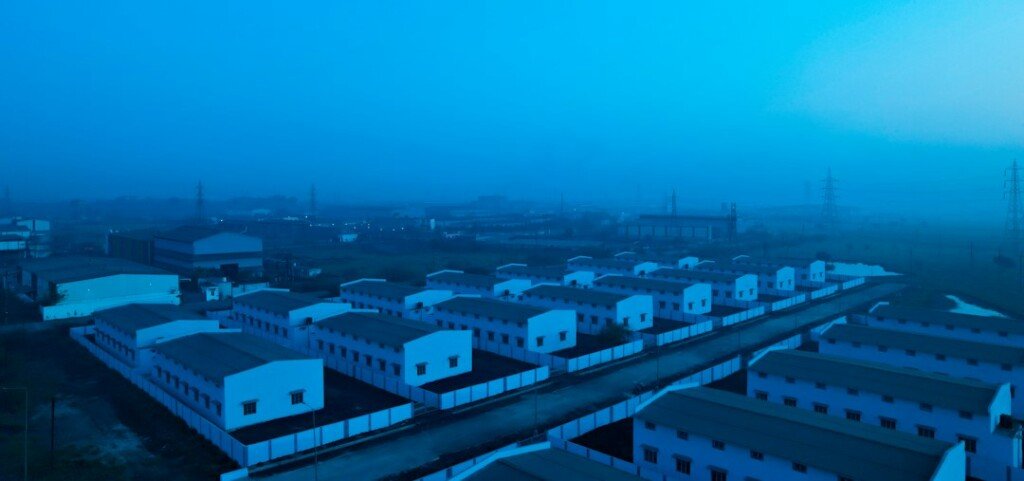
Featured image: Aerial view of an industrial area at dusk, photo by Mustafa Fatemi on Unsplash.