


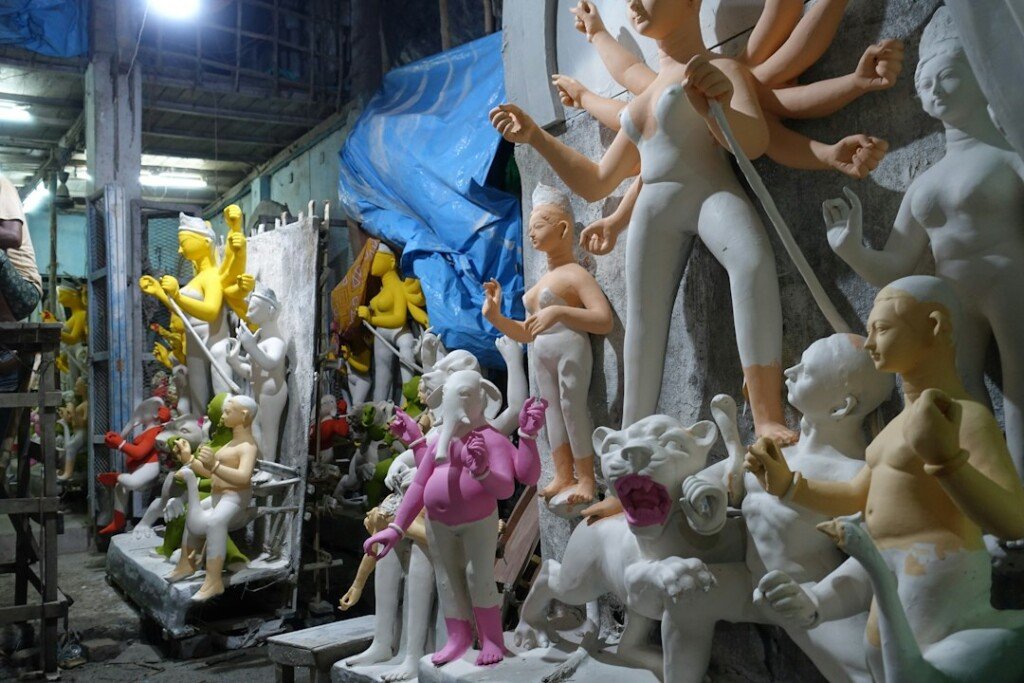

Kumartuli Kolkata is the historic potters’ quarter in North Kolkata where most of the city’s Durga idols are sculpted by hand from river clay. It sits between Rabindra Sarani and the Hooghly, a short walk from Shobhabazar Sutanuti metro station on the Blue Line. Entry to the lanes is free and the workshops are active through the day, but the best time to visit is from late August to early October, in the weeks before Durga Puja, when hundreds of idols stand in various stages of completion. Morning visits between 8 and 11 AM give you the best light, the fewest crowds and the most relaxed artisans. Plan for 1.5 to 2.5 hours, wear shoes you do not mind getting muddy, and ask before photographing anyone. This guide covers how to reach Kumartuli, what you will actually see, the timeline of idol-making, photography etiquette and what else to combine it with nearby.
What is Kumartuli Kolkata and why is it famous?
The name comes from kumor (potter) and tuli (quarter). Potters settled here roughly three centuries ago, many of them migrating from Krishnanagar in Nadia district, because the riverbank at nearby Bagbazar gave easy access to the fine grey clay of the Ganga. Over time the community moved from household pottery to the far more demanding craft of sculpting deities, and today the lanes around Banamali Sarkar Street form the largest idol-making hub in eastern India.
Estimates of the number of workshops vary from source to source, from around 150 established studios to several hundred smaller units, employing well over a thousand artisans in peak season. The idols made here are not just for Kolkata. They are shipped to pujas across India and, increasingly, to Bengali communities abroad, with lighter fibreglass versions built specifically for export. The artisans’ body, the Kumartuli Mritshilpa Sanskriti Samity, represents the community and coordinates with the civic authorities during the festival season.
How to reach Kumartuli by metro, bus and train
By metro: The nearest station is Shobhabazar Sutanuti on the Blue Line (North-South corridor). Exit towards Rabindra Sarani and walk north for roughly 5 to 10 minutes; the first idol workshops appear along the side lanes before you reach Banamali Sarkar Street. Shyambazar station is the next stop north and is also within walking distance. If you are new to the network, our Kolkata metro route guide explains the lines and interchanges. Official timings and fares are published by Metro Railway Kolkata.
By bus: Any bus running along Rabindra Sarani or Central Avenue towards Shyambazar will do. Ask for the Kumartuli or Rajballavpur stop, from where it is a few minutes on foot.
By local train: Bagbazar station on the Sealdah circular line is about ten minutes’ walk away, though metro is far more convenient for most visitors.
By cab or auto: App cabs can drop you at the Rabindra Sarani end, but the inner lanes are too narrow for cars. In the final fortnight before Puja, expect traffic restrictions and lorries loading idols, so metro remains the reliable option.
Best time to visit Kumartuli: month by month
Idol-making follows a fixed rhythm tied to the festival calendar, so what you see depends heavily on when you go.
June to July: bamboo frames and straw
Work begins after the monsoon sets in. Artisans build the kathamo (bamboo armature) and bind it with straw to form the rough body. It is fascinating from a craft perspective but visually bare, and many workshops are only partially active.
August to mid-September: clay and detailing
Two coats of clay go on: a coarse layer mixed with rice husk, then a fine finishing layer. Faces, fingers and ornaments are shaped by hand. This is the best window if you want to watch the actual sculpting rather than the finished product, and the lanes are still relatively calm.
Late September to early October: painting and Chokkhu Daan
Idols are primed, painted and dressed. The most photographed ritual is Chokkhu Daan, the painting of the goddess’s eyes, traditionally done on or around Mahalaya. In 2026 Mahalaya falls on 10 October, with the main Puja days following in the third week of October, so the fortnight before that is peak season. It is also the most crowded, with photographers, tourists and delivery lorries competing for space in the same lanes.
Rest of the year
Kumartuli never fully shuts. Workshops make idols for Kali Puja, Jagaddhatri Puja, Saraswati Puja and commissioned pieces through the year, so a visit in January or April still shows you the craft, just at a slower pace and smaller scale.
Kumartuli timings and entry fee
Kumartuli is a working neighbourhood, not a ticketed attraction, so there is no official opening time or entry fee. Workshops generally get going by 8 AM and many keep working late into the night in peak season. Aim for the morning: the light through the tarpaulin roofs is softer, artisans have more patience for questions, and you avoid the afternoon heat.
In the pre-Puja weeks, the local artisans’ association sometimes collects a small photography contribution, typically reported in the range of Rs 50 to Rs 100, from visitors carrying cameras. This is informal and changes year to year, so carry small notes and treat it as support for the community rather than a formal ticket. Commercial or video shoots may be asked to pay more; confirm on the spot.
Photography etiquette in Kumartuli
The artisans are used to cameras, but they are on a deadline and the workshops are their livelihood. A few rules keep everyone comfortable.
Always ask before photographing a person, especially close-up portraits. A simple nod or “chhobi tulte pari?” (may I take a photo?) goes a long way. Do not step inside a workshop uninvited, and never touch an idol; wet clay and fresh paint are easily damaged. Keep tripods and large bags out of the narrow lanes during busy hours. If an artisan asks you to stop, stop. Buying a small clay item or leaving a tip for someone who posed for you is a decent way to say thanks.
What to see and do in Kumartuli
Banamali Sarkar Street and the inner lanes: This is the core. Walk slowly, look into open-fronted workshops, and watch the progression from straw skeleton to painted goddess within a few hundred metres.
Kumartuli Ghat: A short walk west brings you to the riverbank where clay is landed and, after the festival, where some idols are immersed. It is a quiet spot for a break and a good vantage point for the Hooghly.
Themed idols: Larger community pujas commission unusual designs, and in September you may spot experimental sculptures that will later headline the city’s famous pandals. Our Durga Puja pandal hopping guide covers where those idols end up.
Souvenirs: A few studios sell small clay figurines, painted masks and terracotta pieces. Prices are modest and bargaining is gentle. For the wider festival shopping scene, see our Durga Puja shopping guide.
What to combine with a Kumartuli visit
Kumartuli sits in the heart of old North Kolkata, so a half-day here pairs naturally with other heritage stops. Shobhabazar Rajbari, one of the city’s oldest family pujas, is a few minutes south. Jorasanko Thakurbari, the Tagore family home, is a short ride down Rabindra Sarani. Bagbazar and its riverside ghats are just north, and the sweet shops of the area are worth a detour. Heading south along the river brings you to the Howrah Bridge; our Howrah Bridge guide lists the best photo spots. For a broader itinerary, browse our complete things to do in Kolkata guide. The state’s official tourism portal, West Bengal Tourism, also runs occasional guided heritage walks in the area during the festival season.
Practical tips for visiting Kumartuli
Wear closed shoes: the lanes are often wet with clay and water. Carry a bottle of water and a small umbrella or cap, as most of the walking is in the open. Cash is more useful than cards for tips and small purchases. Public toilets are scarce; use one at the metro station before you start. Avoid the day before and the day of Mahalaya if you dislike crowds, or go very early. If you are visiting with children, keep them close; the workshops have sharp tools, open flames for drying and heavy idols being moved on carts.
Frequently asked questions about Kumartuli Kolkata
Which metro station is closest to Kumartuli?
Shobhabazar Sutanuti on the Blue Line is the closest, about a 5 to 10 minute walk from the main workshop lanes. Shyambazar, one stop north, is also walkable.
Is there an entry fee for Kumartuli?
No. It is a public neighbourhood with open workshops. In the weeks before Durga Puja, a small photography contribution may be requested by the artisans’ association; the amount is informal and varies each year.
When is the best month to visit Kumartuli to see Durga idols?
September is ideal. You see sculpting, painting and near-finished idols side by side, and the lanes are less chaotic than the final week before Mahalaya. In 2026 Mahalaya is on 10 October, so mid to late September is the sweet spot.
Can I buy a Durga idol or a small clay figure at Kumartuli?
Large idols are made to order months in advance for puja committees. Some workshops sell small clay figurines, masks and decorative pieces to visitors, and a few make lightweight fibreglass idols that can be shipped.
How long does a Kumartuli visit take?
Most visitors spend 1.5 to 2.5 hours walking the lanes and the ghat. Photographers and those combining it with Shobhabazar Rajbari or Jorasanko Thakurbari should allow half a day.