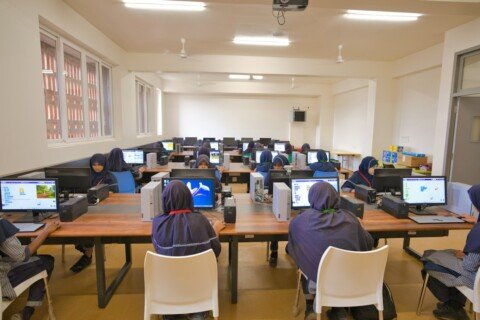




The medical colleges in Kolkata split cleanly into two groups, and knowing which group you are aiming at changes everything about how you plan. The government side includes Medical College Kolkata, Nil Ratan Sircar (NRS), R.G. Kar, Calcutta National Medical College and IPGMER at SSKM Hospital. These charge tuition in the low tens of thousands of rupees a year and admit almost entirely on NEET-UG rank through counselling run by the West Bengal Medical Counselling Committee. The private side, mostly on the city’s outskirts, charges several lakh rupees a year and fills seats through the same counselling plus management and NRI quotas. For a seat at the top three government colleges under the state quota, students generally need a NEET score in the 620-plus range, though closing ranks shift every year with the number of applicants and the difficulty of the paper. Here is how seats, fees and counselling actually work.
Government Medical Colleges in Kolkata
Kolkata is where Western medical education in Asia began, and several of these institutions are close to two centuries old. All of them are attached to large public hospitals, which is the main reason students prefer them: clinical exposure at a busy government hospital is far higher than at a low-footfall private one.
Medical College Kolkata (College Street)
Founded in 1835 under Lord William Bentinck, this was the first institution in Asia to teach Western medicine in English. It sits on College Street in the middle of the city’s old academic quarter and carries an annual MBBS intake of roughly 250 seats. It is consistently the most competitive government option in the state.
Nil Ratan Sircar Medical College (Sealdah)
Known universally as NRS, this college traces its origins to the Sealdah Medical School founded in 1873. It runs an annual MBBS intake of around 250 seats alongside postgraduate, super-specialty, nursing and paramedical programmes. Its location right beside Sealdah station makes it one of the easiest campuses in the city to commute to.
R.G. Kar Medical College (Khudiram Bose Sarani)
R.G. Kar has roots going back to the 1880s and was formally established in its present form in 1916. It also runs an MBBS intake of about 250 seats and serves north Kolkata and a large catchment from the districts beyond.
Calcutta National Medical College (Park Circus)
Established out of the swadeshi movement as an Indian-run alternative to colonial medical education, CNMC sits in Park Circus and is one of the four main city-centre government colleges. Its closing ranks typically sit a little below the top three, which makes it a realistic target for a wider band of candidates.
IPGMER and SSKM Hospital (Bhowanipore)
IPGMER is best known as a postgraduate and super-specialty institute attached to SSKM Hospital, and it also runs an undergraduate MBBS programme. Published seat figures for the MBBS intake vary between sources, with some listing around 150 and others around 250, so verify the current sanctioned intake on the counselling seat matrix rather than on a coaching website.
Colleges in the wider metro area
Beyond the four city-centre names, the College of Medicine and Sagore Dutta Hospital at Kamarhati and ESI-PGIMSR at Joka are both within commuting distance of central Kolkata and appear in state counselling. If you are willing to widen the radius to the rest of West Bengal, the state runs roughly two dozen government medical colleges in total, with a combined MBBS intake in the region of 4,000 seats.
How Much Does MBBS Cost at Medical Colleges in Kolkata?
This is where the gap between government and private is widest, and where you should be most careful about numbers you read online. Fee structures are revised periodically and different sources quote different components, so treat the figures below as planning ranges rather than quotes.
Government colleges. Annual tuition at West Bengal government medical colleges is typically quoted somewhere between roughly Rs 10,000 and Rs 50,000 per year, depending on the college and on which components a source includes. Hostel rent, mess charges, examination fees, books and instruments sit on top of that and are usually the larger part of a government student’s actual monthly outgo. Confirm the exact current figure with the college office before you plan a budget.
Private colleges. Seats filled through state-quota counselling at private colleges are commonly quoted in the region of Rs 4 lakh to Rs 4.5 lakh per year. Management-quota seats at the same colleges are quoted far higher, frequently in the Rs 13 lakh to Rs 16 lakh per year band, and NRI-quota fees are higher again. These numbers move year to year and vary by college, so confirm current pricing directly with the institution before committing to anything.
Counselling registration. Separate from tuition, the state counselling process carries its own non-refundable registration fee, commonly Rs 2,000 for unreserved candidates and Rs 1,500 for SC, ST, OBC, EWS and PwD candidates. There is also a refundable security deposit at the seat-acceptance stage in most rounds.
If you are working out the full picture of what a student year in the city costs, our breakdown of the cost of living in Kolkata for students covers rent, food and transport alongside academic fees.
What NEET Score Do You Need for Medical Colleges in Kolkata?
There is no fixed cutoff. Closing ranks are an output of the counselling process, not an entry requirement set in advance, and they move every year with paper difficulty, the number of candidates and seat-matrix changes. That said, the pattern over recent years is reasonably stable.
- For the top government colleges in the city under the state quota, a general-category score of roughly 620 and above has been the practical safe zone in recent cycles.
- State-quota closing ranks at Medical College Kolkata have been reported in the low thousands for the general category, making it the tightest seat in the state.
- All-India-quota closing ranks at the other city colleges run considerably deeper, into the tens of thousands, because only 15 per cent of government seats are in that pool.
- Reserved categories close at meaningfully lower ranks, and the gap is large enough that category matters more than any single score benchmark.
Rather than chasing a number, look at last year’s published round-wise closing ranks for the specific colleges you care about, then apply a margin. If you are still mapping out the exam year, our entrance exam calendar for Kolkata students lays out where NEET sits relative to WBJEE, CUET and the rest.
How Admission Works: WBMCC Counselling Explained
Every MBBS seat in the state, government or private, is filled on NEET-UG rank through counselling. There is no separate entrance exam and no direct application to a college.
Government seats are split 85 to 15. The 85 per cent state quota is handled by the West Bengal Medical Counselling Committee, and you generally need to satisfy West Bengal domicile conditions to be eligible for it. The remaining 15 per cent all-India quota is handled centrally by the Medical Counselling Committee, and you compete nationally for those seats.
The state process runs in a familiar sequence: online registration and fee payment, document upload, choice filling and locking, then seat allotment across several rounds, followed by reporting to the allotted college. Later rounds and a mop-up round redistribute seats left vacant by candidates who upgraded or withdrew. Two practical points trip people up every year. First, choice filling is where the decision actually gets made, so order your preferences honestly rather than putting a college you would never attend above one you would. Second, seat-acceptance and withdrawal deadlines are strict and non-negotiable, and missing one can cost you the round.
Registration windows, seat matrices and round-wise results are all published on the West Bengal Medical Counselling Committee website, and the exam itself is administered by the National Testing Agency. Those two sites are the only places worth treating as authoritative on dates.
Private Medical Colleges In and Around Kolkata
The private options sit mostly on the edges of the metropolitan area rather than in the city core. KPC Medical College and Hospital in Jadavpur is the best-known one inside the city itself. Jagannath Gupta Institute of Medical Sciences and Hospital is at Budge Budge to the south, and there are further private colleges elsewhere in the state, including at Durgapur, that Kolkata students routinely consider.
The honest trade-off is this. A state-quota seat at a private college is expensive but far cheaper than a management-quota seat at the same place, so the quota you enter through matters more than the college’s name. What you should check on a campus visit is hospital footfall and bed occupancy, because that determines whether you will actually see patients during clinical years. A quiet teaching hospital is the single biggest weakness of a weaker private college, and no fee structure compensates for it.
How to Choose Between Them
Once you know your rank band, the choice usually comes down to four things.
- Clinical exposure. A busy attached hospital beats a shiny building. The old government colleges win on this comfortably.
- Total cost over five and a half years. Multiply the annual figure by 5.5, then add hostel and living costs. The gap between a government seat and a management-quota private seat is life-changing money.
- Commute and accommodation. College Street, Sealdah and Park Circus are well served by Metro, bus and local train. Campuses on the outskirts usually mean hostel life by default rather than by choice.
- Postgraduate prospects. Look at where each college’s recent batches ended up for PG, not at brochure rankings.
Outstation students should sort accommodation early, because good hostel and PG options near the central campuses fill fast. Our guides to hostel options for outstation students in Kolkata and the wider Kolkata college and university guide cover that ground in detail.
Frequently Asked Questions
Which is the best medical college in Kolkata?
By closing rank and reputation, Medical College Kolkata is the most sought-after, followed closely by IPGMER at SSKM and NRS. R.G. Kar and Calcutta National Medical College follow. In practice the difference in teaching quality between the top government colleges is small, and most students end up choosing on rank and commute rather than on a ranking table.
How many medical colleges are there in Kolkata?
There are four main government medical colleges inside the city proper, plus IPGMER, with a further two or three government institutions in the immediate metropolitan area and a small number of private colleges on the outskirts. Across West Bengal as a whole the state runs roughly two dozen government medical colleges.
Can I get MBBS admission in Kolkata without NEET?
No. NEET-UG is mandatory for every MBBS seat in India, including management and NRI quota seats at private colleges. Any agent or advertisement offering a direct MBBS seat without NEET is offering something that does not legally exist.
Do I need West Bengal domicile for the state quota?
For the 85 per cent state-quota seats, yes, you generally need to meet the domicile and residency conditions set out in the counselling notification. Candidates from outside the state compete for the 15 per cent all-India quota instead, and for private-college seats where the eligibility rules differ. Read the current year’s information bulletin carefully, since the conditions are specific about schooling and residence.
Is a private medical college in Kolkata worth the fees?
It depends entirely on the quota. A state-quota seat at a private college is a reasonable option if a government seat is out of reach on rank. A management or NRI quota seat costs several times more over five and a half years, and that decision deserves a hard look at the attached hospital, the internship experience and your family’s actual capacity to fund it without debt that follows you into residency.
Before You Fill Your Choices
Every number in this guide, from seat intakes to fee bands to closing ranks, is a planning figure drawn from published sources and should be checked against the current year’s official seat matrix and information bulletin before you act on it. Sanctioned intakes get revised, fees get notified afresh, and closing ranks are only known after counselling ends. Use the official counselling site as your source of record, keep your documents ready well before the registration window opens, and treat the choice-filling deadline as the real exam.