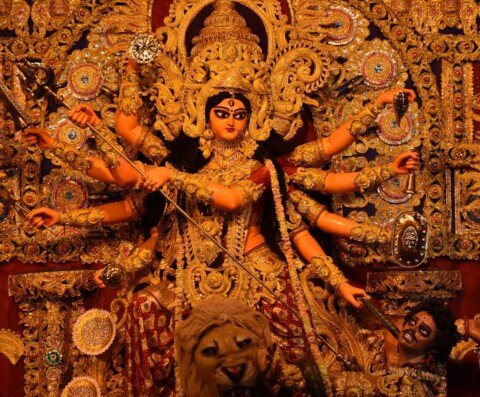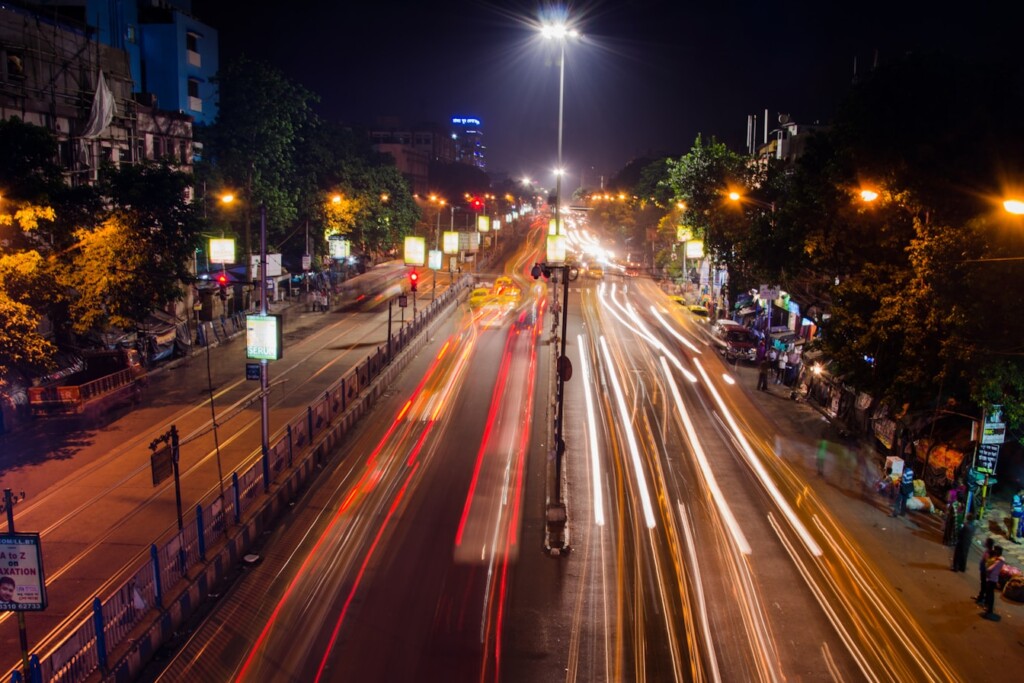



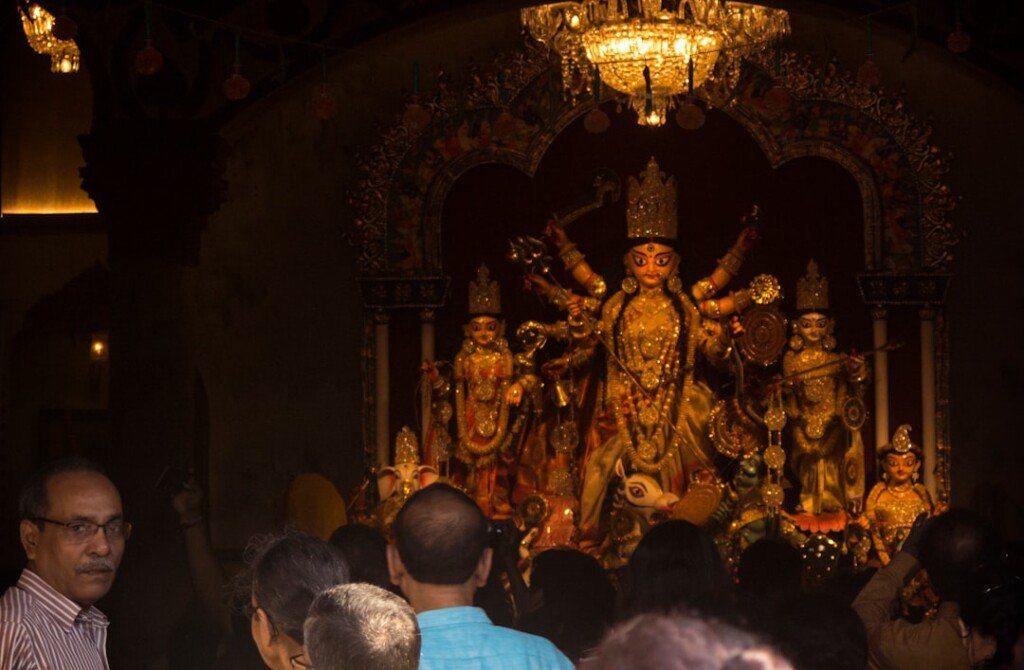

Durga Puja pandal hopping in Kolkata means visiting as many elaborately themed puja pandals, the temporary art structures built to house the goddess Durga’s idol, as possible over the festival’s peak days, moving on foot, by metro, and by shared autos between neighbourhood clusters that each pack dozens of pandals within walking distance of one another. In 2026, Durga Puja runs from Maha Shashthi on 16 October to Vijaya Dashami on 21 October, with Saptami, Ashtami, and Navami (17-20 October) forming the peak pandal-hopping window when the biggest, most talked-about pandals are fully open to the public. The best approach is to pick one neighbourhood circuit per outing instead of crisscrossing the city, start in the early afternoon or after 10 pm to dodge the worst crowds, and lean on the Kolkata Metro’s extended night service for the longer hops between north, central, and south Kolkata.
When Is Durga Puja 2026 in Kolkata?
Durga Puja 2026 falls between 16 and 21 October, with the ritual calendar running:
- Maha Shashthi – 16 October (the goddess’s formal welcome; many pandals open to visitors from this evening)
- Maha Saptami – 17 October
- Maha Ashtami – 19 October (Sandhi Puja and the pushpanjali prayers draw the single biggest crowds of the festival)
- Maha Navami – 20 October
- Vijaya Dashami – 21 October (idols are taken for immersion; pandals are far quieter and some structures are already being dismantled)
Note that Panchang timings shift by a day depending on the tithi calendar a family or committee follows, so it’s worth confirming exact hours for any specific pandal closer to the date rather than assuming a fixed opening time.
Best Time of Day for Durga Puja Pandal Hopping in Kolkata
Timing matters more than route planning when it comes to avoiding Kolkata’s Puja crowds. Early afternoon, roughly 1 pm to 4 pm, tends to be the calmest window because the evening rush hasn’t started and the metro is relatively empty. Late night, from around 10 pm to the early hours, is the second-best option, especially on Saptami and Navami when trains run well past midnight and the temperature drops to a more walkable level. Early evening, from about 6 pm to 10 pm, is when queues are longest at the marquee pandals, so it’s the time to avoid unless you specifically want to see a pandal lit up and at its most crowded and festive. Ashtami is the single busiest day of the festival because of the Sandhi Puja ritual, so first-time visitors are usually better off saving the most famous, longest-queue pandals for Saptami or Navami instead.
Iconic Pandal Circuits to Cover
Kolkata’s pandals cluster naturally by neighbourhood, which makes it possible to cover a dozen or more in a single outing if you stick to one circuit at a time.
North Kolkata Circuit
North Kolkata is where Durga Puja’s community-puja tradition began, and it remains the most atmospheric part of the city to pandal hop. Bagbazar Sarbojanin is one of the oldest community pujas in the city and a fixture on most itineraries, Kumartuli Park sits right beside the potters’ quarter where the clay idols are made, and College Square draws crowds for its lakeside decor. Kashi Bose Lane is another long-running neighbourhood puja worth building into the same walk, since all of these are within a short stretch of central-north Kolkata.
South Kolkata Circuit
South Kolkata is generally where the most elaborate, big-budget theme pandals show up each year, with Ekdalia Evergreen among the long-standing names in the area. Expect longer queues here in the evening, so this circuit is a strong candidate for an early-afternoon or late-night visit.
Salt Lake and New Town Circuit
Salt Lake’s sector-wise block pujas, including BJ Block, have built a reputation for ambitious set design in a comparatively less congested part of the city, making this circuit a good choice if you want big pandals without the density of the old-city crowds. It also pairs naturally with a look around New Town if you have a full day free.
For a longer list of specific pandals to add to any of these circuits, see our roundup of famous Kolkata Durga Puja pandals.
Getting Around: Metro, Buses and Autos During Puja
The Kolkata Metro is the backbone of any pandal-hopping plan because it cuts straight through traffic that can otherwise turn a short hop into an hour-long crawl. On the peak days, several lines extend service well past midnight to handle the festive crowds, though exact last-train times can change year to year, so it’s worth checking current timings before you head out late at night; our Kolkata Metro first and last train timings guide is a good starting reference outside the festival period. For the last mile between a metro station and a pandal, shared autos and cycle rickshaws are usually faster than a private cab given how many roads get partially closed for the festival; our auto and taxi fare guide by zone is useful for knowing what a fair fare looks like. Expect one-way traffic diversions, barricades, and slow-moving pedestrian corridors around every major pandal, so build extra time into your route rather than relying on a fixed schedule.
What to Carry for a Night of Pandal Hopping
- Comfortable, closed shoes you don’t mind standing in for hours in a queue
- Cash in small denominations, since many food stalls and small vendors near pandals don’t take digital payments
- A power bank, since phone batteries drain fast between navigation, photos, and calls in a crowd
- A refillable water bottle and light snacks, since queues at popular pandals can run long
- A compact bag rather than a large one, as security checks are common at bigger pandals
Where to Eat Between Pandals
Street food stalls multiply around every major pandal during Puja, and grazing between stops is as much a part of the tradition as the pandals themselves. Rolls, phuchka, and jhalmuri stalls are almost guaranteed near any big crowd, and many neighbourhood committees also set up their own food stalls to fund the puja. For a broader list of what to look for and where, see our guide to iconic Kolkata street food.
Durga Puja in Kolkata was inscribed on UNESCO’s Representative List of the Intangible Cultural Heritage of Humanity in 2021, recognising the festival’s community workshops, artisanal idol-making, and citywide participation. You can read more about the inscription on the official UNESCO Intangible Cultural Heritage page.
Frequently Asked Questions
When does Durga Puja start in 2026?
Durga Puja 2026 begins with Maha Shashthi on 16 October and runs through Vijaya Dashami on 21 October, with Saptami, Ashtami, and Navami (17-20 October) as the main pandal-hopping days.
Which is the busiest day for pandal hopping in Kolkata?
Ashtami is generally the busiest day because of the Sandhi Puja ritual and the pushpanjali prayers, which draw the largest crowds of the festival. Saptami and Navami are usually more manageable if you want to see the same pandals with shorter queues.
Is pandal hopping free in Kolkata?
Yes, viewing the pandals and idols is free and open to the public. The only costs are typically food, transport, and occasionally a modest photography charge at a handful of the biggest, most heavily sponsored pandals.
Can tourists join pandal hopping in Kolkata?
Yes. Pandal hopping is open to everyone regardless of faith or nationality, and visiting during Durga Puja is one of the most popular reasons travellers plan a Kolkata trip specifically around October. Dressing modestly and being mindful in queues near the idol is appreciated, as this is an active place of worship as well as a public spectacle.
Which area is best for first-time pandal hoppers?
North Kolkata is a good starting point for first-timers because its pandals sit close together and can be covered on foot, giving a strong sense of the tradition’s history without needing a long day of travel between circuits.