


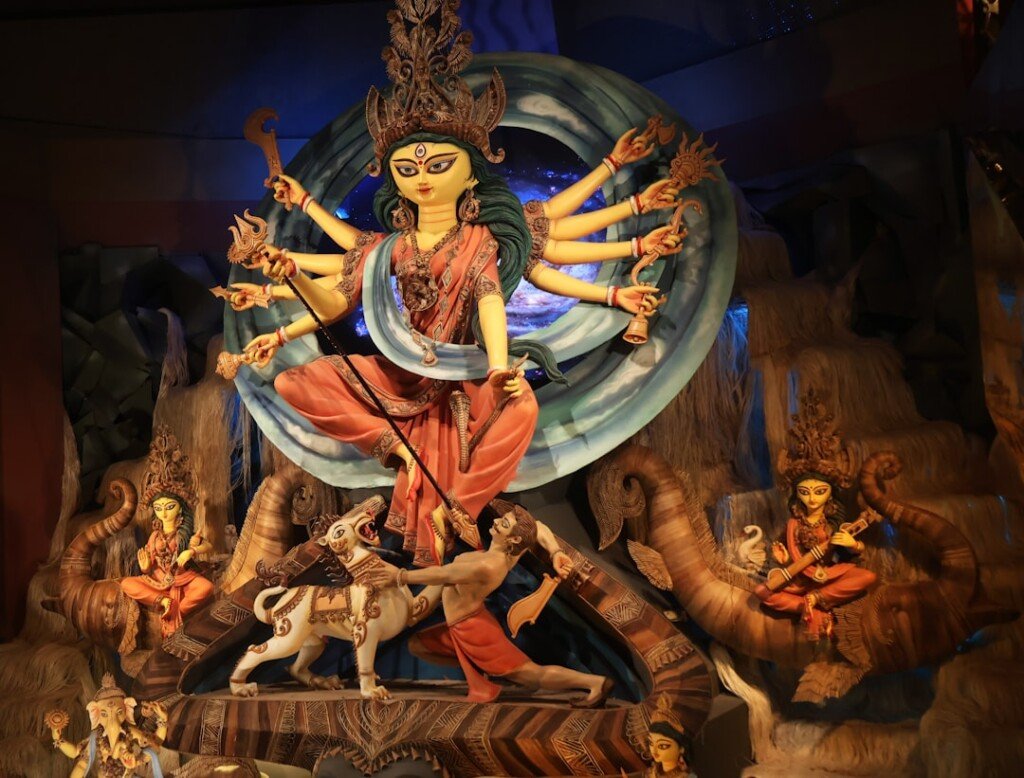

Durga Puja 2026 dates in Kolkata run from Maha Shashthi on Friday 16 October to Vijaya Dashami on Tuesday 20 October, with Mahalaya on Saturday 10 October opening the festive fortnight. Maha Saptami falls on Saturday 17 October, Maha Ashtami on Sunday 18 October and Maha Navami on Monday 19 October. Because the festival opens on a Friday and closes on a Tuesday, a single day of leave on Monday or Tuesday turns Durga Puja 2026 into a five-day break, which is why hotels and trains are already filling. Some almanacs place each tithi a day later (17 to 21 October), so check the Bengali panjika your family follows before fixing rituals. This guide walks through what happens on each day, from the dawn broadcast on Mahalaya to the immersion processions and the Red Road Carnival, and explains how to plan pandal hopping, food, transport and stays around the 2026 calendar.
Durga Puja 2026 Dates at a Glance
The dates below follow the standard Indian sunrise-based calendar, which most Kolkata pujas use to fix their programmes. Tithis begin and end at specific moments rather than at midnight, so the Bengali almanacs (Gupta Press and Bisuddha Siddhanta panjika) occasionally shift a ritual to the following morning. When a puja committee publishes its own schedule, that is the one to trust for that pandal.
- Mahalaya: Saturday 10 October 2026
- Maha Panchami: Thursday 15 October 2026 (most big pandals open by this evening)
- Maha Shashthi (Bodhon): Friday 16 October 2026
- Maha Saptami: Saturday 17 October 2026
- Maha Ashtami (Sandhi Puja): Sunday 18 October 2026
- Maha Navami: Monday 19 October 2026
- Vijaya Dashami (immersion begins): Tuesday 20 October 2026
- Kojagari Lakshmi Puja: Sunday 25 October 2026
2026 is a slightly late Puja because the lunar year carried an extra month (Adhik Maas) earlier in the year, pushing the festival about three weeks later than in 2025. Mid-October in Kolkata usually means the tail end of the monsoon: warm, humid days with a real chance of evening showers, so the weather section below is worth reading before you plan long walks.
Mahalaya: Saturday 10 October 2026
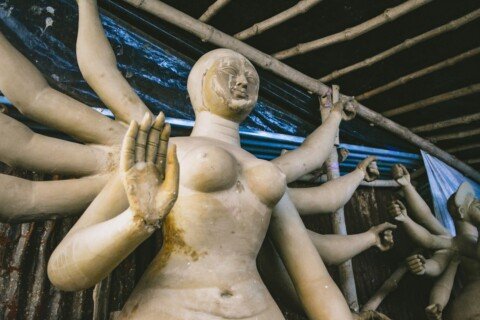
Mahalaya is the last day of Pitru Paksha and the traditional signal that Durga Puja has begun. In Kolkata the day starts before sunrise. Families gather at the Ganga ghats, especially Babughat, Bagbazar Ghat and Ahiritola Ghat, to offer tarpan to their ancestors, and radios across the city play the Mahishasuramardini programme that All India Radio first broadcast in 1931. Kumartuli’s artisans traditionally paint the eyes of the goddess (chokkhu daan) on or around this day, which makes the potters’ quarter one of the most atmospheric places to be. Our Kumartuli visitor guide covers the best time to go and how to behave in the workshops.
From Mahalaya onward, the city changes pace. Pandal construction reaches its final stage, shopping streets such as Gariahat and New Market stay open late, and the first pandal inaugurations start within a few days. In recent years many of the largest pandals have opened to visitors from Dwitiya or Tritiya, several days before the formal start, to spread out the crowds.
Maha Panchami: Thursday 15 October 2026
Panchami is not a ritual day in the strict sense, but in practice it is when Kolkata’s pandal hopping begins. By the evening of 15 October most of the award-contending pandals in North, South and East Kolkata will be open, and the crowds are lighter than on the main days. If you have only one free weekday evening, this is the one to use for the most crowded venues such as Sreebhumi, Santosh Mitra Square and Deshapriya Park. The Durga Puja pandal hopping guide explains how to group pandals by zone.
Maha Shashthi: Friday 16 October 2026
Shashthi is the formal opening of the puja. The key ritual is Bodhon, the awakening of the goddess, performed in the evening along with Amantran (invitation) and Adhibas (sanctification). At most pandals the idol’s face is unveiled on Shashthi evening, and dhak drummers begin their four-day residency. For families it is a day of new clothes and an evening walk to the neighbourhood pandal. Because 16 October is a Friday, expect the first heavy crowds of the season after 7 pm, particularly in South Kolkata.
Maha Saptami: Saturday 17 October 2026
Saptami begins at dawn with Nabapatrika snan, the ritual bath of nine plants bound together to represent the goddess, carried to a river or pond and back in procession. At the big community pujas of North Kolkata, such as Bagbazar Sarbojanin, this early-morning procession to the ghat is one of the most photogenic moments of the festival. The main Saptami puja follows in the morning, with pushpanjali (flower offering) for the public, usually between 9 am and noon. Saptami is also the first day most pandals distribute bhog, the community meal of khichuri, labra and chutney. Being a Saturday in 2026, it will be the busiest daytime for pandals of the entire festival.
Maha Ashtami: Sunday 18 October 2026
Ashtami is the most important day. Morning pushpanjali draws the largest queues of the festival, and the tradition is to fast until anjali is offered. Kumari Puja, the worship of a young girl as the living goddess, is performed at Belur Math and at several bonedi bari (heritage family) pujas. The highlight is Sandhi Puja, the 48-minute window that joins the end of Ashtami and the start of Navami, marked by 108 lamps and 108 lotuses. The timing depends entirely on the tithi and in 2026 is likely to fall in the morning hours of Monday 19 October by the sunrise calendar, though panjika-following pujas may perform it late on Sunday night. Check the notice board at your pandal. Sunday Ashtami means the whole city is out; plan to eat early and travel by metro.
Maha Navami: Monday 19 October 2026
Navami is the last full day of worship, closing with the Navami homa (fire ritual) and a grand evening aarti with dhunuchi naach, the incense-pot dance performed to the rhythm of the dhak. It is the traditional day for a mutton feast at home and the busiest night for restaurants. Pandals stay open until very late, and the night of Navami into Dashami morning is the last chance to see the theme pandals at full lighting. If you are working on Monday, this is the evening to take off.
Vijaya Dashami: Tuesday 20 October 2026
Dashami begins with Darpan Bisarjan, the symbolic immersion in which the goddess’s reflection is seen in a bowl of water, followed by Sindoor Khela, when married women smear vermilion on the idol and on each other. From the afternoon, idols are carried to the Hooghly for immersion at Babughat, Judges Ghat, Bagbazar Ghat and other designated ghats. Immersions continue over the following days on a schedule set by Kolkata Police and the Kolkata Municipal Corporation. The evening is for Bijoya greetings, embracing friends (kolakuli) and sweets. Our guide to Bengali sweet shops in Kolkata lists where to buy boxes for Bijoya visits.
After Dashami: Carnival and Lakshmi Puja
Since 2016 the West Bengal government has hosted the Red Road Durga Puja Carnival a few days after Dashami, a parade of award-winning idols on tableaux along Red Road before their immersion. The 2026 date is announced closer to the festival; it has usually been held within a week of Dashami. Kojagari Lakshmi Puja follows on the full moon of Sunday 25 October, and Kali Puja comes about three weeks after Durga Puja. Kolkata does not fully return to normal working rhythm until the end of October.
How to Plan Durga Puja 2026 in Kolkata
Stays
Hotels in Park Street, Esplanade and Salt Lake fill first. Booking by late August is ideal; by mid-September the mid-range options are usually gone. Students and budget travellers can look at hostels and guesthouses in North Kolkata, where several heritage pujas are within walking distance. See PG and hostel options in Kolkata for typical prices.
Transport
Kolkata Metro runs extended services from Panchami to Navami in most years, typically until the early hours, with a reduced or special schedule on Dashami. The official Metro Railway Kolkata site publishes the Puja timetable a week or two before the festival, and the Kolkata Metro route guide explains which line serves which pandal cluster. Road traffic near major pandals is restricted from the evening, and app cabs surge heavily, so the metro plus walking is the sensible default.
Food
Bhog at pandals is free and usually served from around noon on Saptami, Ashtami and Navami; queues form early. Restaurants run Puja menus and stay open late, but the most popular Bengali restaurants need bookings for Ashtami and Navami dinners. Street food near the big pandals runs through the night.
Weather
October in Kolkata averages daytime highs around 32 degrees Celsius with humidity above 70 percent, and the monsoon’s retreat can still bring heavy evening showers, as happened during the festival in several recent years. Carry a compact umbrella, wear footwear that can get wet and keep phones in a zip bag. The India Meteorological Department’s Kolkata office issues short-range forecasts through the festival; check its bulletin each afternoon before heading out. Read our monsoon commute survival guide for flood-prone stretches to avoid.
Frequently Asked Questions
When is Durga Puja in 2026?
Durga Puja 2026 runs from Maha Shashthi on Friday 16 October to Vijaya Dashami on Tuesday 20 October, with Mahalaya on Saturday 10 October. Some Bengali almanacs list the main days one day later, from 17 to 21 October, so confirm with the panjika or puja committee you follow.
What are the Durga Puja 2026 holidays in West Bengal?
State government offices and most schools in West Bengal typically close from Saptami through Dashami, with many institutions extending the break to cover Lakshmi Puja and Kali Puja. The official West Bengal holiday list for 2026 confirms exact dates; expect closures from at least 17 to 20 October.
Which day of Durga Puja is the most crowded?
Ashtami evening and Navami night are the most crowded, and in 2026 Ashtami falls on a Sunday, which will make it the peak of the festival. Panchami evening and early mornings on any day are the quietest times to visit big pandals.
When does Durga Puja immersion happen in 2026?
Immersion begins on Vijaya Dashami, Tuesday 20 October 2026, and continues for several days on a schedule published by Kolkata Police. The Red Road Carnival for award-winning idols usually takes place within a week after Dashami.
Is Durga Puja 2026 a good time to visit Kolkata as a tourist?
Yes, provided you book early. The festival is inscribed on UNESCO’s list of Intangible Cultural Heritage, the city is open around the clock, and the five-day window from 16 to 20 October gives first-time visitors enough time to see the major pandals. Expect crowds, higher hotel prices and some rain.