



Kolkata ferry routes connect the Howrah side of the Hooghly with a string of ghats on the Kolkata bank, including Fairlie Place, Armenian Ghat, Chandpal, Babughat, Shovabazar, Ahiritola and Bagbazar. Most passenger ferries run roughly from 8 am to 8:30 pm, and fares are reported to be only about Rs 5 to Rs 10 for a standard crossing. They are the cheapest way to cross the river, they skip the traffic on Howrah Bridge, and they put you close to Howrah Station or the business districts of Dalhousie and Dharamtala. Services are run by river transport operators and cooperatives together with state agencies, so timings and fares can differ between ghats and change with the tide, season and festivals. Treat every figure in this guide as indicative and confirm at the ticket counter before you travel.
This guide explains which ghats link to which, how the main crossings work, what to expect on board, and when a ferry beats the metro, a bus or a taxi.
Main Ferry Routes Across the Hooghly
The busiest services are the short commuter crossings between Howrah and the Kolkata bank. Passengers use them to reach offices, courts and markets without joining the bridge traffic. The ghats most often named in transport studies of the Howrah ferry system are Howrah (Units I and II), Armenian, Fairlie Place, Babughat, Shovabazar, Ahiritola and Bagbazar. The usual pairings are below.
- Howrah to Fairlie Place and Armenian Ghat: serves the Dalhousie and Strand Road offices on the Kolkata side, a short hop from Howrah Station.
- Howrah to Chandpal Ghat: lands you near Dharamtala and the Raj Bhavan side of the city centre.
- Howrah to Babughat: reaches the Eden Gardens and Strand Road area, with onward buses from the Babughat bus stand.
- Howrah to Bagbazar via Golabari, Ahiritola and Shovabazar: the north Kolkata run, useful for Bagbazar, Kumartuli and the old Shovabazar neighbourhood.
- Fairlie Place to Belur, Dakshineswar and Aryadaha: a longer, scenic route used by pilgrims and day trippers heading up the river. This service is not available at all hours, so ask about the last return boat.
Service levels on individual routes change, and some of the minor ghats operate less often than the main Howrah crossings. Ask at the ghat counter which boat is running and when the last departure is.
Kolkata Ferry Timings and Fares
Most ferries start around 8 am and stop by roughly 8:30 pm, with the heaviest use during morning and evening office hours. Waiting times are usually shorter at peak hours and longer in the middle of the day. Reported fares for a standard crossing are about Rs 5 to Rs 10, which makes the ferry one of the cheapest public transport options in the city. Longer upriver trips to Belur or Dakshineswar cost more than a short crossing. Bring small change, since tickets are sold at the ghat counter and large notes slow everything down.
Private nouko (country boat) rides are a different product. They leave from Prinsep Ghat, mainly at sunset, and have been reported at about Rs 250 to Rs 400 for a private boat carrying up to four people. Rates are negotiated, so agree the price and duration before you step in. Our Prinsep Ghat guide covers boat rides there in more detail.
Which Ghat Should You Use?
From Howrah Station to the City Centre
If you arrive at Howrah and your destination is in Dalhousie, Strand Road or Dharamtala, the ferry is often faster than a taxi over the bridge, particularly during the morning and evening rush. Walk from the station to the Howrah ghat and board a boat for Fairlie Place, Armenian Ghat or Chandpal. Our Howrah Station guide explains the exits and the walk to the river.
For Sightseeing and Photography
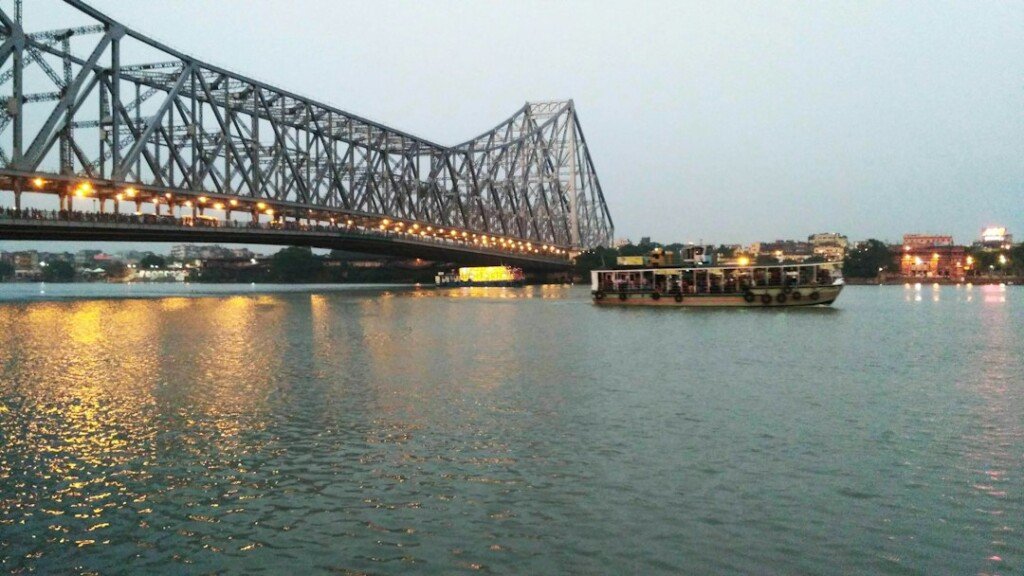
A ferry ride gives one of the best low-cost views of the Howrah Bridge and the lit-up riverfront at dusk. Choose an early evening crossing, sit near the open side of the boat and keep your phone and bag secured, since decks are crowded.
When the Ferry Is Not the Best Choice
If you are carrying heavy luggage, travelling with someone who has mobility difficulties or crossing late at night, a taxi or the metro is safer. Our auto and taxi fare guide by zone lists what to expect to pay, and the complete guide to getting around Kolkata compares the main modes side by side.
What to Expect on Board
- Boarding: ghats have gangways or floating pontoons that move with the tide. Watch your step, especially at low water or during the monsoon.
- Crowds: morning and evening boats are packed with commuters. Stand clear of the edge and hold onto railings.
- Safety: life jackets are not always visible on short crossings. Avoid overloaded boats and do not board in strong wind or heavy rain.
- Weather: services can be reduced during storms, high tides and the heavy rains of the monsoon months.
- Festivals: around Durga Puja and Kali Puja, extra immersion-related restrictions can change ghat access, so check locally before planning a crossing.
Newer Boats and What Is Changing
The state introduced a fleet of steel-hulled ferries on the Hooghly to replace the older wooden boats known as bhutbutis. Reports describe vessels with capacities of about 60, 80 and 200 passengers. Separately, plans for hybrid-electric ferries aimed at river tourism were covered in our report on Kolkata’s hybrid-electric ferries. Watch for updates, because new tourism-focused services may add routes and set their own fare structures. For official information on inland waterways, see the Inland Waterways Authority of India, and for visitor information see West Bengal Tourism.
Kolkata Ferry FAQs
What are the main ferry routes in Kolkata?
The main routes link Howrah with Fairlie Place, Armenian Ghat, Chandpal and Babughat, plus a northern run from Howrah through Golabari, Ahiritola and Shovabazar to Bagbazar. A longer service from Fairlie Place goes upriver to Belur, Dakshineswar and Aryadaha.
What time do Kolkata ferries start and stop?
Most services run from about 8 am until roughly 8:30 pm. Hours can vary by ghat, season and weather, so ask at the counter for the last boat of the day.
How much is a ferry ticket in Kolkata?
Short crossings have been reported at about Rs 5 to Rs 10. Longer upriver routes and private boat rides cost more. Confirm the current fare at the ghat before boarding.
Is the ferry faster than the metro or a taxi?
For a Howrah to Dalhousie or Strand Road trip at peak hours, often yes, because the ferry avoids bridge congestion. For longer journeys or late evenings, the metro or a taxi is usually the better choice.
Are Kolkata ferries safe for tourists?
Regular commuter ferries are used by many people daily, but boarding and crowding need care. Avoid overloaded boats, stay away from the edge and skip the ferry in bad weather. See also our commuting apps guide for planning the rest of your route.