



If you have spent the last three days refreshing NTES and arguing with a bus operator about a fare that had quietly tripled, you can stop. Eastern Railway restored normal traffic on the New Farakka line on Saturday night, roughly 65 hours after a stretch of track gave way and cut Kolkata off from North Bengal. Trains to Siliguri, New Jalpaiguri, Malda and Balurghat are moving again on their booked routes, and the long detours through Azimganj and Bihar are being wound down.
It has been an unusually bruising week for a corridor that most Kolkata families only think about when they are booking a Puja trip to the hills. Here is what actually broke, what it took to fix it, and what you should still watch for if you are travelling north in the next few days.
What Broke, and Why It Took So Long
The failure was not a landslide in the dramatic sense. Days of heavy rain around Farakka pushed water through the embankment sitting between the Up and Down lines on the stretch between New Farakka and Tildanga, in Eastern Railway’s Malda division. A pond next to the track added pressure from the other side. The clay filled ground underneath softened, lost a large volume of soil and simply sank, taking the Up track out of alignment.
Monsoon patrolmen spotted the misalignment in the small hours and operations on the affected line were suspended immediately as a safety measure. That call was the right one, but it also meant shutting the single busiest artery between Kolkata and North Bengal, and beyond it Assam and the Northeast. There is very little redundancy on that corridor, which is why one damaged section wiped out the Darjeeling and Dooars traffic, the Malda and Balurghat traffic and a chunk of the Assam bound long distance network all at once.
The repair itself was a slow, wet fight. Crews went in with six piling rigs and around 200 workers, later reinforced by another 100 local hands and 100 more brought in from Azimganj in the Howrah division. Seven wagons of stone dust were unloaded at the site, ten more were pulled from the monsoon reserve at Sujnipara, and another eighteen were held ready at Jamalpur, Bhagalpur and Malda Town for piling and stone dust packing. Eastern Railway General Manager Gitika Pandey visited the site to review the work.
Progress stalled repeatedly because the rain would not stop. Soil at the repair site stayed unstable and waterlogged, and you cannot pack ballast into ground that is still moving. The weather finally broke on Friday night, and there has been no fresh rainfall in the area since Saturday morning.
How the Line Was Reopened
With dry ground to work on, the railway imposed a power block on Saturday, which was the only practical way to lift the collapsed track and get at the formation underneath. Work near New Farakka station moved quickly after that. Repairs were signed off as satisfactory by Saturday morning, overhead wiring was made good through the day, and a trial run was put over the repaired section.
The trial run cleared, technical officers certified the track fit, and normal services resumed on Saturday night. Eastern Railway Chief Public Relations Officer Shibram Majhi confirmed that traffic on the line had returned to normal, adding that passenger safety, quick restoration and assistance to affected passengers are the priorities during any natural disaster.
The Bus Fare Problem That Came With It
The part of this story that hit ordinary travellers hardest had nothing to do with the railway. With the trains gone, the overnight bus became the only realistic option to Siliguri, and pricing followed demand straight up. Fares on the Kolkata to Siliguri run, normally around Rs 1,500, were reported at Rs 5,000 to Rs 6,000 over the past few days.
The state government did move on it. The Transport Department put 23 additional buses on the Kolkata to Siliguri route and 12 on the Siliguri to Kolkata leg on Friday, with extra services added on the Durgapur to Balurghat, Kolkata to Balurghat and Malda to Kolkata routes. Six special evening buses left Kolkata’s New Esplanade Bus Terminus for Siliguri. State transport undertakings were told to deploy according to demand, and district magistrates were asked to coordinate with private operators and stop unreasonable fare hikes, with tickets issued at government regulated fares.
Chief Minister Suvendu Adhikari directed the district magistrates of Malda and Murshidabad to arrange food packets and drinking water for stranded passengers, and said accommodation would be arranged if the situation had not normalised, using government accommodation where available and hired hotels and lodges otherwise.
What This Means If You Are Travelling North This Week
Restoration is not the same thing as a clean timetable. A 65 hour shutdown leaves a backlog of rakes and crews in the wrong places, and it takes a few cycles for that to settle.
- Check your PNR and live running status on the morning you travel, not the night before. Services are restored, but individual trains can still run late while the corridor clears its backlog.
- If your train was cancelled during the disruption, e-ticket refunds are automatic and need no application from you. Counter ticket holders must surrender the ticket at a railway counter within the permitted window.
- Do not book a premium priced private bus for later this week on the assumption that trains are still down. They are not. Check rail availability first.
- If you were quoted Rs 5,000 or more for a Kolkata to Siliguri seat during the disruption, that was a demand spike, not the new normal. State run services were the sanest option throughout and remain so.
- Build slack into onward connections at NJP or Siliguri for the next two or three days, particularly if you have a hill transfer or a flight from Bagdogra booked.
- Keep an eye on the forecast rather than the news. This failure was caused by saturated ground, and more heavy rain across South Bengal is expected in the coming days.
Frequently Asked Questions
Are North Bengal trains from Kolkata running now?
Yes. Eastern Railway restored normal services on the New Farakka line on Saturday night after a successful trial run on the repaired track. Trains towards Siliguri, New Jalpaiguri, Malda and Balurghat are running on their booked routes again.
How long was the line shut?
More than 65 hours. The track was taken out of service after monsoon patrolmen detected subsidence following heavy rain, and normal running resumed on Saturday night.
Is the Howrah to New Jalpaiguri Vande Bharat running again?
Services on the line have been restored to normal, which covers the Vande Bharat along with the other long distance trains that were cancelled or diverted. Check your specific train’s live status on the day of travel, because individual services can still run late while the backlog clears.
Will I get a refund for a train cancelled during the disruption?
Yes. When Indian Railways cancels a train, e-ticket holders receive an automatic full refund with no application needed. If you bought a counter ticket, surrender it at a railway counter within the permitted window.
What actually caused the track to sink?
Prolonged heavy rain around Farakka forced water through the embankment between the Up and Down lines near New Farakka and Tildanga. Pressure from an adjacent pond worsened it, the clay filled ground softened and lost soil, and the Up track subsided.
Could it happen again this monsoon?
The repaired section has been certified fit by railway technical officers, so the immediate risk is closed out. The broader vulnerability is real though. Waterlogged embankments are a recurring monsoon problem on that corridor, and the Kolkata to North Bengal route has almost no alternative path to absorb a failure.
The Bottom Line
The railway got a badly damaged formation back into service in under three days, in weather that kept undoing the work, and that is a genuinely good outcome. What the week exposed is less comforting. One softened embankment near New Farakka was enough to sever Kolkata from North Bengal entirely, push bus fares to four times their normal level and leave the state government arranging food packets and hotel rooms for stranded passengers. Until that corridor has a usable alternative, every heavy monsoon carries the same risk. If you are travelling north this week, check your PNR on the morning of departure and give yourself room on connections. For context on the days when everything was cancelled, see our earlier reports on the September 4 cancellations including the Vande Bharat and the full September 5 cancellation list.
Sources: IANS report published 5 September 2026 quoting Eastern Railway Chief Public Relations Officer on the completion of the trial run and resumption of normal services; Millennium Post reports published 5 September 2026 on the cause of the subsidence, the scale of the restoration effort and the state government’s relief and additional bus arrangements; ANI report of 5 September 2026 on buses deployed from Siliguri.
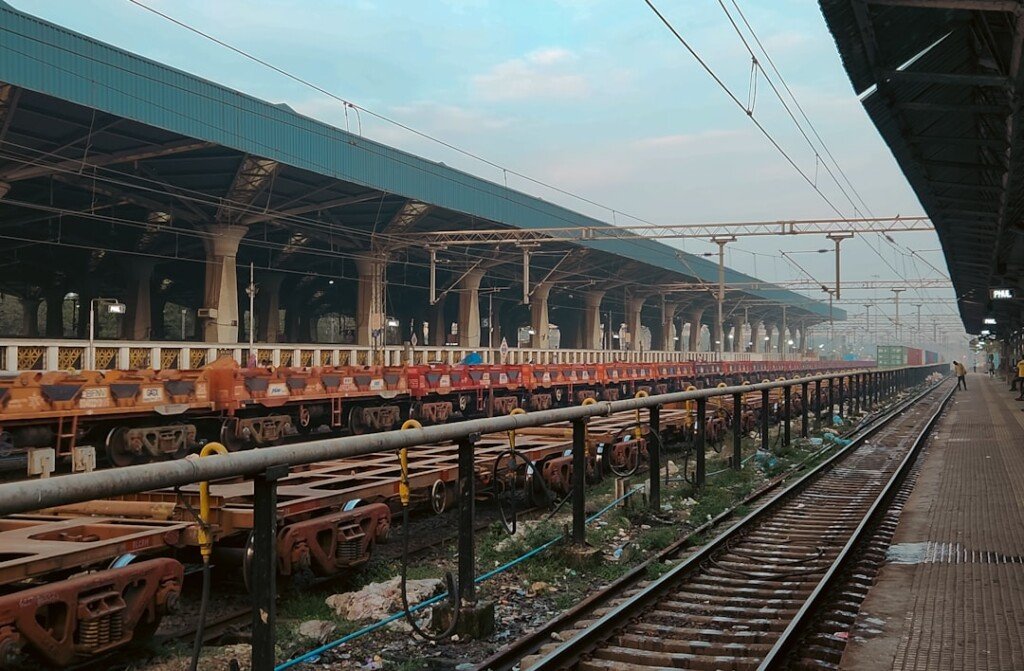
Featured image: a quiet Indian railway station platform and tracks in the morning, photo by Zoshua Colah on Unsplash.