


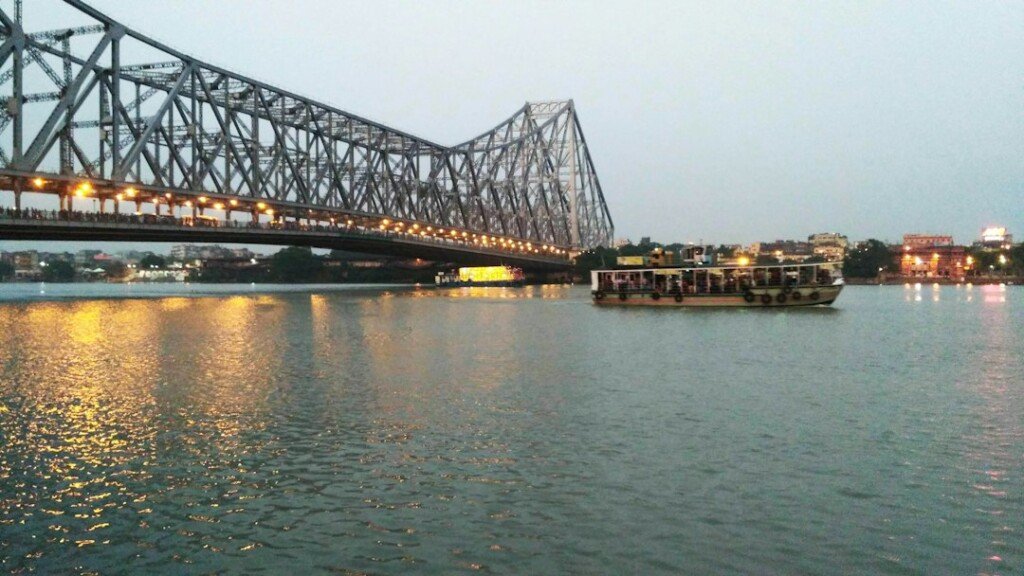

Howrah Bridge Kolkata, officially Rabindra Setu, is a 705 metre steel cantilever bridge that links Howrah with central Kolkata across the Hooghly River. It opened in 1943, carries roughly 100,000 vehicles and well over 150,000 pedestrians a day, and is held together entirely by rivets, with no nuts or bolts. You can walk across it in about 10 to 15 minutes using the footpath on either side. The easiest ways to reach it are the Howrah Station stop on the Green Line metro, a short walk from Howrah Railway Station, or a bus, taxi or ferry to the ghats nearby. The best photo spots are the Mullick Ghat flower market on the Kolkata side, the Howrah-side ghats at sunrise, and the river itself from a ferry. This guide covers its history, how to visit, where to take photographs, and practical safety tips.
Howrah Bridge Kolkata: Quick Facts
The bridge is a steel suspension-type balanced cantilever, 705 metres long, with a main span of about 457 metres. The roadway is around 21.6 metres wide with six lanes, and a footpath of roughly 4.6 metres runs along each side. About 26,500 tons of steel went into it, most of it a high-tensile alloy supplied by Tata Steel. It is maintained by the Kolkata Port Trust, which oversees the river port, and it is widely regarded as one of the busiest cantilever bridges in the world.
Because the bridge is still a working structure, expect constant traffic, noise and crowds at almost any hour. It is not a quiet monument, and that energy is a large part of its appeal.
History of Howrah Bridge
Before the current bridge, the two banks of the Hooghly were joined by a floating pontoon bridge, which had to be opened to let ships pass and struggled with the growing traffic between Howrah Station and Calcutta. A permanent crossing was planned in the early twentieth century, and the cantilever design was chosen so that no piers would stand in the river channel, which would have obstructed navigation.
The bridge was built during the Second World War and opened to traffic on 3 February 1943. Because of wartime concerns about air raids, there was no formal opening ceremony. It was first called the New Howrah Bridge, and on 14 June 1965 it was renamed Rabindra Setu in honour of Rabindranath Tagore. Most Kolkata residents, and almost every taxi driver, still call it Howrah Bridge.
How to Reach Howrah Bridge
By metro
The Green Line serves the Howrah side, with stations at Howrah Maidan and Howrah next to the railway complex. From there the bridge approach is a walk of a few minutes through busy streets. Check current timings and station details in our Kolkata Metro Green Line guide, and confirm official updates with Metro Railway Kolkata.
By train, bus or taxi
Howrah Railway Station is the nearest major rail terminus, so travellers arriving by long-distance train can reach the bridge on foot. If you are coming from Sealdah, see our comparison of Howrah to Sealdah options. Our guide to Kolkata railway stations explains which terminus serves which routes. Taxis and buses reach the bridge from most parts of the city, though traffic at peak hours can be heavy, so allow extra time.
By ferry
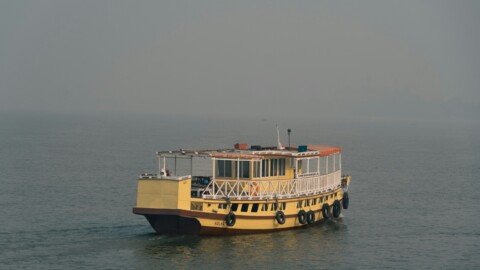
Passenger ferries cross the Hooghly between several Kolkata and Howrah ghats and offer the most memorable view of the bridge from the water. Routes, timings and fares are covered in our Hooghly ferry guide.
Best Photo Spots Around Howrah Bridge
Searches for the best photo spots near Howrah Bridge usually point to the same handful of places, each with a different mood.
Mullick Ghat flower market
On the Kolkata side, just by the bridge approach, Mullick Ghat is home to Kolkata’s wholesale flower market. Early morning is the busiest time, with piles of marigolds and roses framed by the bridge girders overhead. Be respectful of vendors, ask before photographing people at close range, and watch your step on the wet, crowded ground.
The ghats at sunrise and sunset
The riverside ghats on both banks give clear views of the bridge against the sky. Sunrise brings soft light, bathers and boats, while sunset lights up the steel work and the river traffic. Weekday mornings are calmer than weekends.
From a ferry or boat
A short ferry crossing is the simplest way to capture the full span of the bridge without crowds around you. For other river views, see our Prinsep Ghat guide.
The footpath
Walking the footpath gives close-up views of the rivets and the river below. Do not stop in the middle of the walkway, because it is a busy commuter route. Step aside carefully if you want to take a picture.
Best Time to Visit Howrah Bridge
Early morning, roughly from sunrise until about 9 AM, is the best time for photographs and for the flower market. Late afternoon to sunset is the other good window. Peak office hours bring heavy crowds and slow traffic. October to February offers the most comfortable weather, while the monsoon can make ghats slippery. See our guide to the best time to visit Kolkata for a month-by-month view.
Safety and Etiquette Tips
Keep bags closed and phones secure in crowds, as with any busy Kolkata location. The bridge is a security-sensitive piece of infrastructure, so follow any signs and instructions from police or port staff, and avoid flying drones or using tripods on the roadway. Rules can change, so confirm locally if you plan a professional shoot. Carry water, wear comfortable shoes and avoid walking along the carriageway.
Plan a Wider Day Out
Howrah Bridge pairs well with a morning at the flower market, a ferry ride, and then a meal or sightseeing elsewhere in the city. Our complete things to do in Kolkata guide lists nearby neighbourhoods and attractions, and the West Bengal Tourism website has official visitor information.
Howrah Bridge FAQs
Is Howrah Bridge the same as Rabindra Setu?
Yes. It was renamed Rabindra Setu in 1965 after Rabindranath Tagore, but it is still commonly called Howrah Bridge.
How long does it take to walk across Howrah Bridge?
The bridge is 705 metres long, so most people need about 10 to 15 minutes, longer if the footpath is crowded or you stop for photographs.
Is there an entry fee for Howrah Bridge?
No ticket is needed to walk on the footpaths. It is a public road bridge. Vehicles have historically not been charged a toll, but confirm locally if this matters for your trip.
What is the best place to see Howrah Bridge from?
A ferry on the Hooghly gives the best full view, while Mullick Ghat and the riverside ghats are best for atmosphere and sunrise photographs.
Why is Howrah Bridge famous?
It is famous for its cantilever design with no piers in the river, its all-rivet construction, its heavy daily traffic and its status as the best-known symbol of Kolkata.