


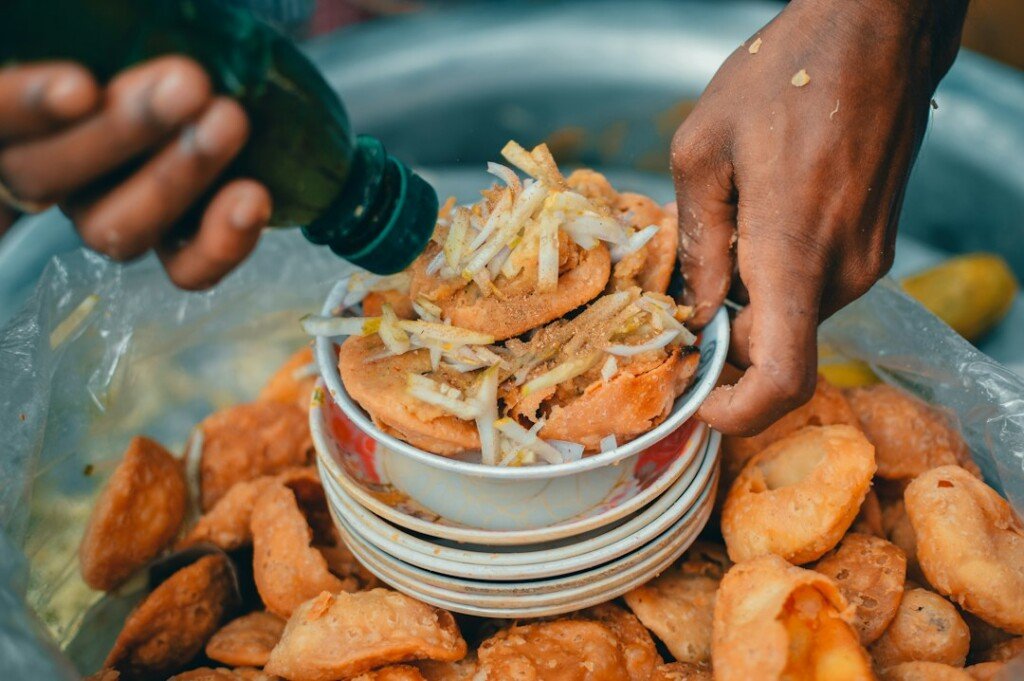

The best Bengali snacks in Kolkata are the fried and crumbed tea-time favourites known as telebhaja, cutlets and chops: aloor chop (potato fritter), beguni (fried aubergine slice), piyaji (onion fritter), fish fry, mochar chop (banana blossom croquette) and the egg-coated kabiraji cutlet. They are sold at century-old cabins and tiny counters, mostly in North and Central Kolkata, and a plate usually costs a fraction of a restaurant meal. College Street, College Square and the lanes around them are the best place to start, because several of the city’s oldest snack shops sit within walking distance of each other. Go between mid-afternoon and early evening, when the oil is hot and the trays are fresh, and pair the plate with a cup of tea. This guide explains what each snack is, which long-running shops are worth knowing, how to order, and how much to budget. Prices change often, so treat any figure here as indicative and confirm at the counter.
What Counts as Bengali Snacks in Kolkata?
Bengali snacking is built around two ideas: telebhaja, which simply means anything fried in oil, and the cutlet-and-chop tradition that grew out of the city’s colonial-era cabins and tea rooms. Both are eaten with muri (puffed rice) or on their own, usually with kasundi (Bengali mustard sauce) and sliced onion. Here are the items you will see on almost every menu:
- Aloor chop: a spiced mashed-potato ball, crumbed or batter-fried, often with a peanut or coconut filling.
- Beguni and piyaji: aubergine slices and onion fritters in a gram-flour batter, the classic pairing with muri.
- Mochar chop: a croquette of banana blossom, a very Bengali vegetarian option.
- Fish fry: a crumbed, deep-fried fillet, traditionally bhetki, served with kasundi and salad.
- Kabiraji cutlet: a cutlet of fish, chicken or mutton wrapped in a lacy coating of egg, one of the city’s signature colonial-era inventions.
- Mutton and egg chops: heavier, meat-based chops that work as a small meal.
Best Places for Telebhaja, Cutlets and Chops
Lakshmi Narayan Shaw & Sons
Founded in 1918, this long-running shop is known for its telebhaja and for the seasonal aamer chop, made with raw mango. It is also remembered for its link to the freedom movement, and free telebhaja is handed out on 23 January, the birthday of Subhash Chandra Bose, according to The Better India.
Mitra Cafe
Dating to 1910, Mitra Cafe is best known for its kabiraji cutlets, including fish and mutton versions, and for its brain chop. If you want to understand why the kabiraji is considered a Kolkata original, this is a good place to try one.
Kalika, College Square
Opened in 1965 near College Square, Kalika is a small, no-frills counter serving mutton cutlets, bhetki fry, beguni, piyaji and mochar chop. It is a good pick if you want to sample several items in one sitting.
Basanta Cabin, College Street
Opened in 1931 on College Street, Basanta Cabin serves kabiraji, fish fry and telebhaja. A popular story says the kabiraji was invented by a head chef trying to impress Rabindranath Tagore, but treat that as local lore rather than confirmed history. The location makes it an easy stop if you are already exploring the College Street book market.
Potlar Dokan
Founded nearly a century ago, Potlar Dokan is a budget favourite known for vegetable chops such as capsicumer chop and potoler chop, plus dhoka and phuluri. Reported prices were just a few rupees per piece, so check the current rate before you order in bulk.
For more old-school counters and tea rooms, see our guide to the historic eateries of Kolkata.
How Much Do Bengali Snacks Cost in Kolkata?
Vegetable chops and fritters at traditional counters are typically very cheap, often single digits to a few tens of rupees per piece, while fish fry and kabiraji cutlets cost noticeably more because of the fish or meat. A generous plate with tea at an older cabin usually stays well under a normal restaurant bill, but prices vary by shop and season, so confirm at the counter. For more ideas on eating well on a small budget, read our guide to budget eats under Rs 200.
Best Time and Tips for Eating Bengali Snacks
- Visit between about 3 PM and 7 PM, when most counters are frying fresh batches.
- Ask for kasundi and sliced onion with fish fry and cutlets.
- Order a few different pieces to share rather than a large plate of one item.
- Carry small change, as many older shops prefer cash.
- Finish with a cup of tea. Our guide to tea shops in Kolkata lists good options.
If you want more variety beyond fried snacks, our street food guide to kathi rolls, jhalmuri and puchka covers the city’s chaat and roll stalls. The Incredible India food guide to Kolkata is a useful official overview of the wider food scene.
Frequently Asked Questions
What is telebhaja?
Telebhaja means anything fried in oil in Bengali. In Kolkata it usually refers to fritters such as beguni, piyaji and aloor chop, eaten as an evening snack, often with muri.
What is the difference between a chop and a cutlet in Kolkata?
A chop is typically a round croquette with a spiced filling, such as potato, beetroot, banana blossom or mutton. A cutlet is usually a flatter, crumbed or egg-wrapped piece of fish, chicken or mutton. The kabiraji is a cutlet wrapped in a lacy egg coating.
Where can I find the best Bengali snacks in Kolkata?
College Street and College Square in Central Kolkata have several of the oldest snack counters, including Basanta Cabin and Kalika. Mitra Cafe and Lakshmi Narayan Shaw & Sons are also widely known names.
Are Bengali snacks vegetarian?
Many are. Aloor chop, beguni, piyaji, mochar chop and other vegetable chops are vegetarian, but fish fry, kabiraji and mutton chops are not. Always confirm at the counter, as shops often fry different items in the same oil.
What is the best time to eat telebhaja in Kolkata?
Late afternoon to early evening is best, when snacks are freshly fried and shops are at their busiest. Many older shops close earlier than restaurants, so check timings locally.