


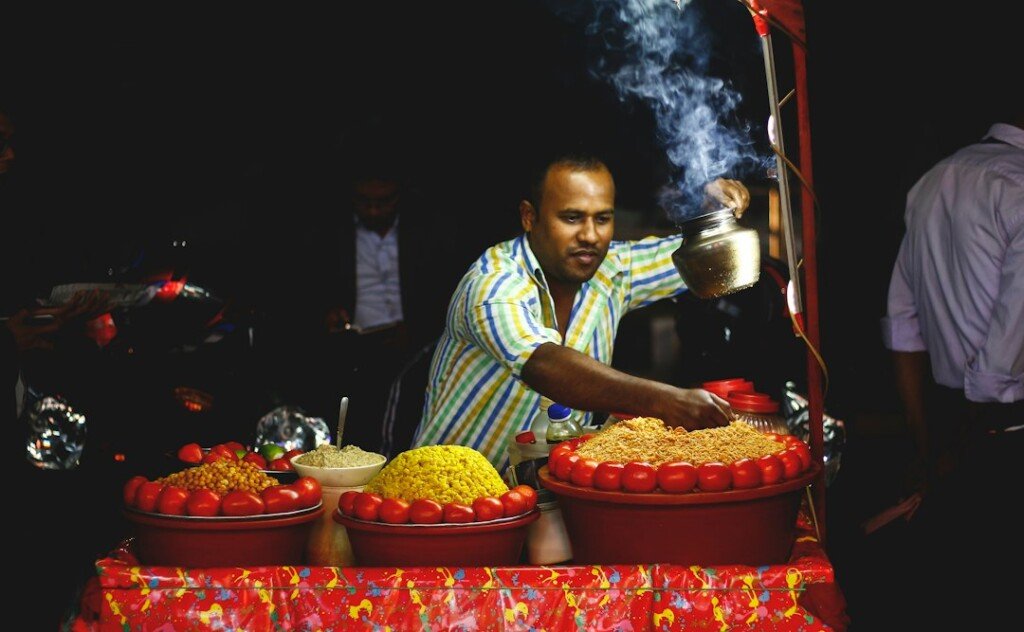

Kolkata street food is built around three icons: the kathi roll, jhalmuri and puchka. The kathi roll is a kebab or egg wrapped in paratha, and it traces back to Nizam’s near New Market. Jhalmuri is puffed rice tossed with mustard oil, onion, chilli and spices, sold by vendors across the city for a few minutes’ wait and a small price. Puchka is the Kolkata version of pani puri: a crisp hollow shell filled with spiced potato and chickpeas, then dunked in tangy tamarind water. If you only have one afternoon, start with a roll at New Market, snack on jhalmuri at a park or maidan, and finish with puchka from a busy corner stall. This guide explains what each dish is, where to find it, and how to eat street food in Kolkata safely. Prices change often, so treat any figures as a rough guide and confirm with the vendor.
Kathi Rolls: Where the Kolkata Street Food Story Starts
The kathi roll is widely credited to Nizam’s, a restaurant in the New Market area (Hogg Market) that is usually said to have started serving the roll in the 1930s. The popular story is that a hurried customer needed something he could eat on the move, so kebabs were wrapped in a paratha instead of being served on a plate. The name comes from kathi, the Bengali word for the skewers the kebabs were cooked on. Details of the origin vary between accounts, so it is best treated as local food history rather than a recorded fact.
Nizam’s is still the best-known address, on Hogg Street near New Market. Expect a queue at peak hours. Beyond the original, rolls are sold at small stalls and outlets all over the city, and the usual fillings are chicken, mutton, egg, and paneer for vegetarians. An egg roll, where the paratha is cooked with a beaten egg layer, is the cheapest and most common version.
What to Order
Start with an egg-chicken roll if you want the classic street style. Ask for onions and green chilli with a squeeze of lime. If you prefer less spice, say so before the vendor assembles it. Vegetarian travellers can ask for a paneer or egg-free option, but confirm that the same griddle is not used for meat if that matters to you.
Jhalmuri: The Everyday Snack
Jhalmuri is made to order. The vendor mixes puffed rice (muri) with chopped onion, green chilli, coriander, a pinch of salt, roasted peanuts, sev or chanachur, and a splash of raw mustard oil, then serves it in a paper cone. The mustard oil gives it a sharp, distinctive bite that sets it apart from bhel from other cities.
You will find jhalmuri sellers near the Victoria Memorial grounds, along the Maidan, outside colleges, at Prinsep Ghat and by the river, and at almost every busy crossing. It is a good option for a light snack because it is dry, quick and usually inexpensive. You can request less chilli or no onion, and ask the vendor to go easy on the oil.
Puchka: Kolkata’s Take on Pani Puri
Puchka is the Bengali name for what other cities call pani puri or golgappa. The Kolkata version uses a crisp shell, a filling of mashed potato and chickpeas, and tangy tamarind water, often with a sweet chutney. Many Kolkatans will argue that the tamarind water, rather than the mint water used elsewhere, is what makes it different. Locals also swear by the small variations each vendor adds, including a dash of black salt and chopped chilli.
Puchka stalls cluster near markets, tram and bus stops, and outside schools and colleges, and the evening crowd is the best indicator of a good vendor. A busy stall with fast turnover is usually a better bet than an empty one. Plates are usually sold by the number of pieces, and the vendor will often add an extra piece at the end.
Best Areas to Find Street Food in Kolkata
New Market and the streets around it are the most reliable starting point for rolls. For an evening walk that mixes street snacks and sit-down options, read our guide to Park Street after dark. College Street and the area around the university buildings are popular with students for quick snacks, and the stalls outside Presidency University and the Coffee House crowd are a familiar sight. For a deeper look at heritage dining, see our guide to historic eateries like Indian Coffee House and Dilkhusha Cabin.
If you want to go beyond the big three, the neighbourhood of Tiretta Bazaar offers an early-morning Chinese breakfast scene, covered in our Tiretta Bazaar guide, and Momo lovers can browse our best momos in Kolkata list.
How to Eat Street Food in Kolkata Safely
Choose stalls with a steady stream of customers, where the food is cooked or assembled fresh in front of you. Prefer hot, freshly cooked items, and be cautious with water-based items such as the tamarind water in puchka if you have a sensitive stomach. Carry hand sanitiser, and keep bottled water with you. Visitors who are not used to local street food can start with cooked items like rolls before trying puchka. Official food safety guidance is available from the Food Safety and Standards Authority of India.
A Simple One-Afternoon Street Food Route
Begin around 4 pm near New Market with a roll at Nizam’s or a nearby stall. Walk or take the Metro towards the Maidan side for jhalmuri, then head to a busy puchka stall in the evening when the crowds build up. Finish with tea or a sweet nearby. This route avoids long travel between stops and works well in the cooler months, between November and February.
Frequently Asked Questions
Where did the kathi roll originate in Kolkata?
The kathi roll is commonly traced to Nizam’s near New Market, where kebabs wrapped in paratha became a popular takeaway. Accounts of the exact year and story differ, so it is best described as a local tradition tied to Nizam’s.
What is the difference between puchka and pani puri?
They are essentially the same snack, but the Kolkata puchka usually uses tamarind water and a potato and chickpea filling, while versions in other cities often use mint-flavoured water.
Is jhalmuri safe to eat for tourists?
Jhalmuri is a dry snack, so it is generally easier on the stomach than water-based street foods. Choose a busy vendor and ask for less chilli if you are not used to spice.
How much does street food cost in Kolkata?
Most snacks like jhalmuri, puchka and egg rolls are inexpensive, and prices vary by area and vendor. Prices change often, so confirm the rate with the vendor before ordering.
What is the best time to try street food in Kolkata?
Late afternoon and early evening are the best times, when stalls are busy and the food is freshly made. Winter months are the most comfortable for walking between stops.